
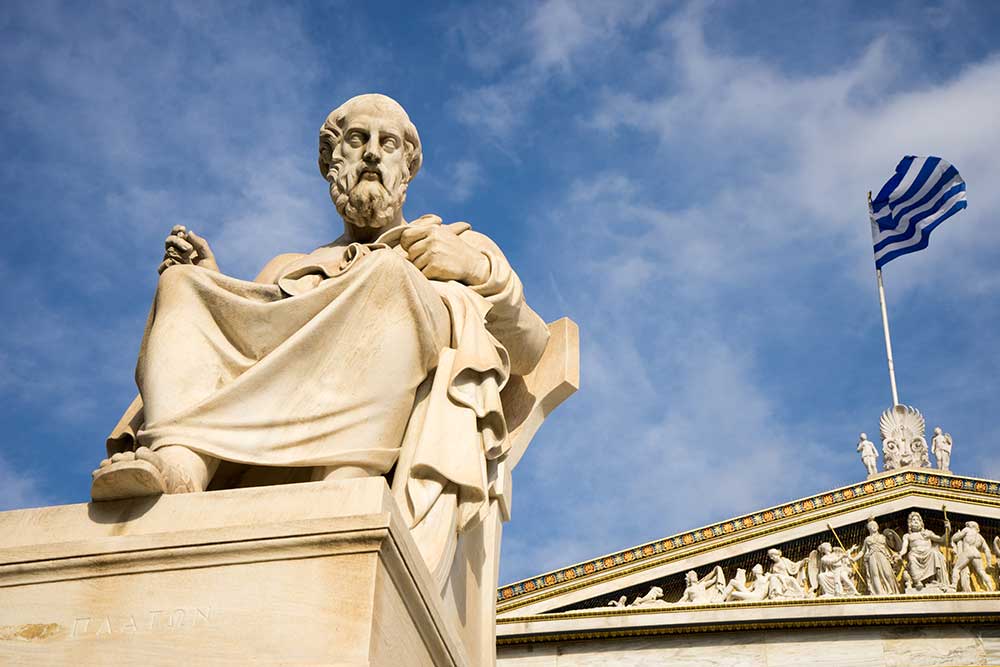
Plato’s vision of the ideal state, often described as a utopia, is set out principally in his dialogue The Republic. This essay outlines the main features of that state, paying particular attention to its social organisation, leadership and conception of justice, while noting certain tensions that scholars have identified in Plato’s proposals.
Class Structure and Social Harmony
At the centre of Plato’s model lies a strictly hierarchical division of labour. Citizens are allocated to one of three classes according to their natural aptitudes: philosopher-rulers, auxiliaries (soldiers and administrators) and producers (farmers, artisans and merchants). The arrangement rests on the assumption that individuals differ in their innate capacities and that social justice consists in each person performing the single function for which they are best suited. As Plato argues through the character of Socrates, this functional specialisation prevents the disorder that arises when citizens attempt tasks beyond their natures (Plato, 2007). The division is reinforced by a rigid system of education and, for the two upper classes, communal living and the abolition of private property. These measures are intended to eliminate the self-interest that Plato believed corrupted existing Greek poleis.
The Philosopher-Kings and the Pursuit of Truth
Plato maintains that only those who have attained knowledge of the Forms, especially the Form of the Good, are fit to govern. The famous allegory of the cave illustrates the lengthy intellectual journey required before the ruler can return to the political arena and apply that knowledge. Because philosophers love wisdom rather than wealth or honour, they are presented as uniquely impartial. Nevertheless, Plato acknowledges that most people will resist this claim; he therefore permits the use of a “noble lie” to persuade the lower classes to accept the rulers’ authority. Critics have questioned whether such deception is compatible with the very justice the ideal state is supposed to embody (Annas, 1981). The tension highlights a recurring problem in Plato’s thought: the use of undemocratic means to secure what he regards as the most rational end.
Education, Censorship and the Good Life
Education is designed to produce citizens whose souls are ordered in the same way as the city itself. Early training emphasises gymnastics for the body and music for the soul, while higher studies culminate in dialectic. Poetry and drama are heavily censored lest they encourage the indulgence of emotions that undermine rational self-control. The purpose of these restrictions is not aesthetic but moral: the state exists to enable human beings to live well, and living well requires the harmonious rule of reason over appetite. Plato therefore equates the justice of the individual soul with the justice of the polis, arguing that both achieve excellence when each part fulfils its proper role.
In conclusion, Plato’s ideal state offers a coherent, if austere, vision of political order grounded in metaphysical realism, functional hierarchy and rigorous moral education. While the model continues to stimulate debate about the proper relationship between knowledge and power, its reliance on censorship and the suppression of private life has led many commentators to regard it as an authoritarian rather than a genuinely utopian project.

