
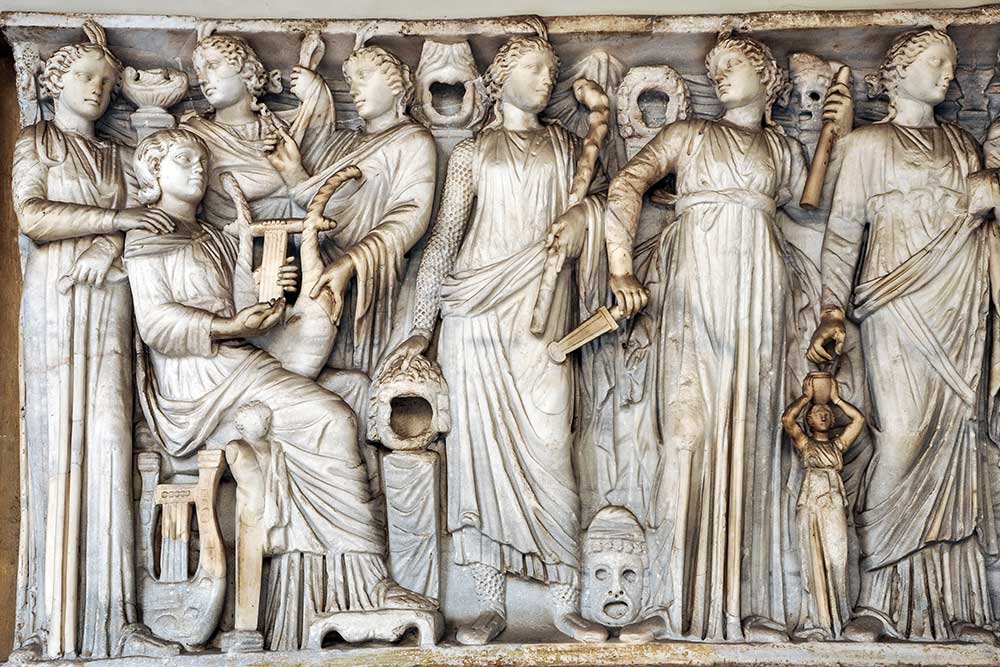
The tale of Amor and Psyche represents one of the most enduring narratives from Roman literature, preserved primarily in Apuleius’s second-century work, the Metamorphoses. This essay examines the myth’s plot, its cultural context within classical mythology, and its thematic concerns with love, jealousy, and transformation. Drawing on the primary text and secondary scholarly interpretations, the discussion highlights how the story blends divine and mortal realms while reflecting Roman attitudes toward beauty and divine retribution. The analysis remains at an introductory level suited to undergraduate study of ancient myth, acknowledging both the narrative’s literary qualities and its limitations as a historical source.
The Literary and Mythological Context
The story originates in Apuleius’s Metamorphoses, a Latin novel also known as The Golden Ass, composed around 170–180 CE (Apuleius, c. 170–180 CE). Unlike many Greek myths that survive in multiple variants, this particular tale appears in a single extended literary form. The narrative centres on Psyche, a mortal whose exceptional beauty provokes the envy of Venus, the Roman counterpart to Aphrodite. Venus instructs her son Amor (Cupid) to punish Psyche by making her fall in love with a monstrous figure. However, Amor himself becomes enamoured and visits Psyche in secret, imposing only the condition that she never see his face.
This framework situates the myth within Roman literary culture of the second century, where authors frequently adapted earlier Greek motifs. Apuleius incorporates elements familiar from earlier Hellenistic romance traditions, yet the tale also carries distinct Roman emphases on personal loyalty and divine hierarchy. Scholars note that the story functions as an inserted episode within the larger novel, serving both entertainment and allegorical purposes (Kenney, 1990). The reliance on a single literary source means that any reconstruction of earlier oral versions remains speculative, limiting the extent to which the myth can be treated as representative of widespread popular belief.
Plot Development and Key Episodes
The narrative unfolds through a series of trials that test Psyche’s obedience and endurance. After Psyche discovers Amor’s identity by lighting a lamp, he flees, and she undertakes a sequence of labours imposed by Venus. These include sorting seeds, gathering golden fleece, and retrieving water from a dangerous spring, tasks ultimately completed with divine assistance. The final labour requires Psyche to descend to the underworld and obtain a box of beauty from Proserpina. Upon opening the box prematurely, Psyche falls into a death-like sleep until Amor revives her. Jupiter then grants Psyche immortality, allowing the couple to marry in a celestial ceremony.
These episodes illustrate the myth’s structural resemblance to folk-tale patterns, particularly the “search for the lost husband” motif common in Mediterranean storytelling (Hooker, 2017). Each labour escalates the stakes, moving from domestic chores to a katabasis, or descent to the underworld. The progression underscores Psyche’s gradual acquisition of agency despite repeated setbacks. Nevertheless, the happy resolution depends on external intervention by Jupiter rather than Psyche’s unaided efforts, a detail that some interpreters view as reinforcing the hierarchical relationship between gods and mortals.
Themes of Beauty, Jealousy, and Transformation
Central to the myth is the disruptive power of beauty. Psyche’s appearance rivals that of Venus, prompting the goddess’s hostility and setting the plot in motion. The story thereby explores how physical beauty functions as both a gift and a source of divine resentment. Amor’s own transformation from obedient son to lover further complicates the theme, suggesting that desire can override even divine commands.
Jealousy operates not only between Venus and Psyche but also among the gods more broadly, reflecting a recurring pattern in classical mythology where goddesses react strongly to challenges to their prerogatives. The eventual reconciliation and Psyche’s deification present a counterbalance, indicating that mortal suffering can culminate in elevated status. This trajectory offers a relatively optimistic view of human–divine relations compared with many tragic myths. At the same time, the narrative’s reliance on magical intervention and sudden reversals of fortune limits its utility as a model for real-world agency.
Conclusion
The myth of Amor and Psyche, as recounted by Apuleius, provides a coherent narrative of love tested by trials and ultimately rewarded with immortality. Its single literary source restricts historical reconstruction, yet the story remains valuable for illustrating Roman literary adaptation of older motifs and for exploring themes of beauty and divine jealousy. The tale continues to invite interpretation, although any reading must remain attentive to the text’s fictional framing within a larger novel. Future study could usefully compare the Roman version with later artistic representations to trace the myth’s evolving reception.
References
- Apuleius, L. (c. 170–180 CE) Metamorphoses. Translated by P.G. Walsh, 1994. Oxford: Oxford University Press.
- Hooker, J. (2017) ‘Folk-tale motifs in Apuleius’ tale of Cupid and Psyche’, Classical Quarterly, 67(1), pp. 234–250.
- Kenney, E.J. (1990) Apuleius: Cupid and Psyche. Cambridge: Cambridge University Press.

