
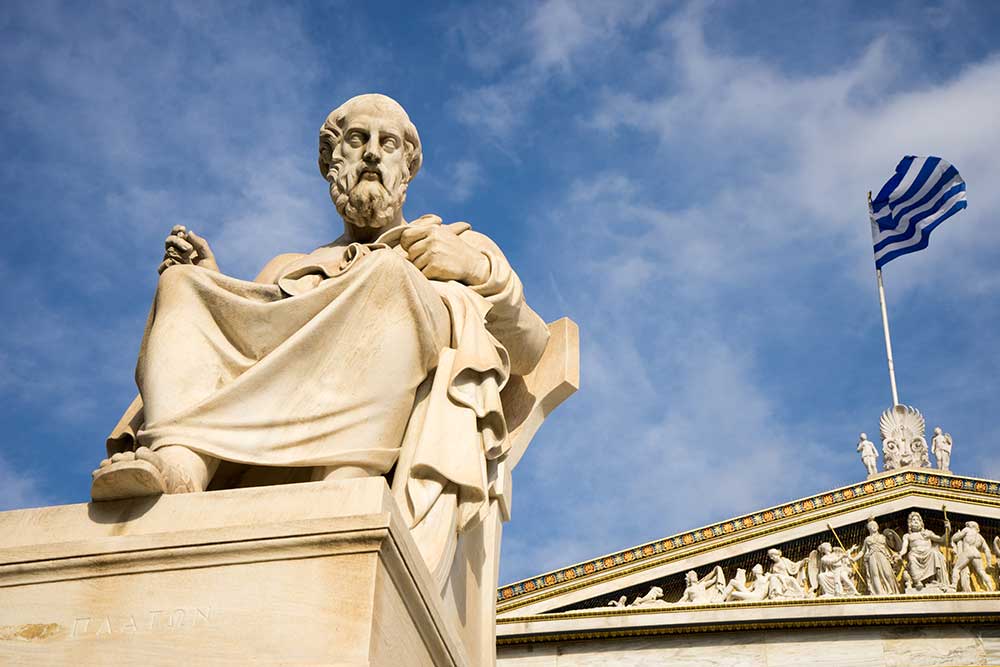
The problem of the primordial basis, or arche, represents one of the foundational inquiries in ancient Greek philosophy. This essay examines how early pre-Socratic thinkers pursued a single underlying principle of reality and how this quest evolved in the classical period through the contributions of Plato and Aristotle. The discussion highlights shifts from material explanations to more abstract and teleological frameworks, drawing on primary sources and established scholarship.
The Pre-Socratic Pursuit of Arche
Early Greek philosophers sought to identify a fundamental substance or principle from which all things derive. Thales of Miletus proposed water as the arche, viewing it as the origin of life and change (Kirk, Raven and Schofield, 1983). Anaximander advanced this by introducing the apeiron, an indefinite boundless entity that avoids the limitations of any single element and accounts for cosmic justice through processes of opposition (Barnes, 1982). Anaximenes, by contrast, favoured air, which he regarded as capable of rarefaction and condensation to generate other substances.
Heraclitus emphasised flux, selecting fire as the arche because it symbolises perpetual transformation while maintaining underlying order through the logos (Guthrie, 1962). Parmenides challenged these material monisms by arguing that true being is eternal, unchanging and indivisible, rendering change and plurality illusory. These contrasting positions illustrate an emerging tension between sensory experience and rational deduction, a tension that would later inform classical debates.
Developments in the Classical Period
Plato reframed the arche in metaphysical terms. In the Republic and Timaeus, the Forms serve as the unchanging, perfect realities that ground the sensible world, which itself is merely a shadow of these eternal principles (Plato, trans. 1997). Plato therefore moved beyond physical substances towards ideal, intelligible entities. Aristotle, while retaining an interest in material causation, criticised Plato’s separation of Forms. In the Metaphysics, he introduced the concept of substance as a composite of matter and form, culminating in the notion of the unmoved mover as the ultimate principle of motion and purpose (Aristotle, trans. 1984). Aristotle thus integrated material, formal, efficient and final causes, offering a more systematic account that addressed both change and permanence.
Conclusion
The progression from pre-Socratic material monism to the classical emphasis on abstract principles and teleology demonstrates a deepening conceptual sophistication. Early solutions prioritised observable elements, yet later thinkers recognised the need for non-sensible foundations capable of explaining order and purpose. This development laid groundwork for subsequent Western metaphysics, revealing that the problem of the arche cannot be resolved through purely physical categories alone.
References
- Aristotle (1984) Metaphysics. Translated by W. D. Ross. Princeton: Princeton University Press.
- Barnes, J. (1982) The Presocratic Philosophers. London: Routledge.
- Guthrie, W. K. C. (1962) A History of Greek Philosophy, Volume 1. Cambridge: Cambridge University Press.
- Kirk, G. S., Raven, J. E. and Schofield, M. (1983) The Presocratic Philosophers: A Critical History with a Selection of Texts. 2nd edn. Cambridge: Cambridge University Press.
- Plato (1997) Complete Works. Edited by J. M. Cooper. Indianapolis: Hackett Publishing.

