
Introduction
Mikhail Lomonosov’s “Ode on the Seizure of Khotin” (1739) is more than a mere celebration of a military victory; it is a profound exercise in constructing the symbolic identity of the Russian Empire during the reign of Empress Anna. Written to commemorate the Russian triumph over the Ottoman forces at Khotin, the poem transcends the historical event to craft an imperial worldview that positions Russia as a formidable, legitimate, and expanding power. This essay explores how Lomonosov employs poetic language, geographical imagination, and cultural parallels—particularly with Greek classical traditions—to represent the Russian Empire not as a contested political entity, but as a natural and inevitable order. Through Baroque high style, he transforms martial conquest into a sacred spectacle; through expansive geographical imagery, he maps Russia as a transregional force; and through allusions to antiquity, he Europeanizes Russian sovereignty, framing its actions as expressions of civilization and destiny. This analysis aims to illuminate how Lomonosov’s ode serves as a vehicle for imperial ideology, rendering power palpable and unquestionable to both domestic and international audiences in the 18th century.
High Style as Imperial Authority: Crafting Power through Poetic Grandeur
Lomonosov’s primary tool for symbolizing the Russian Empire is his adoption of a Baroque high style, characteristic of the ode as a genre—a form often deemed the “highest expression of poetic art” in his era (Billington, 2004). This stylistic choice is not merely decorative; it performs a political function by creating an atmosphere of grandeur and inevitability around Russian power. From the poem’s opening lines, the speaker experiences “a sudden rapture” that elevates him to a “high mountain summit,” identified as Mount Parnassus (Lomonosov, 1739, p. 182). This ecstatic ascent is not just a poetic flourish but a deliberate framing of the poet’s perspective as one of divine or prophetic insight, suggesting that the imperial narrative to follow is not opinion but revelation.
The high style operates through specific rhetorical devices that simulate the weight of inevitability. Hyperbole, for instance, magnifies Russian victories beyond measurable bounds, while antithesis starkly divides the world into a righteous Russia and its chaotic foes (Billington, 2004). Rhetorical questions and exclamations further compress reflection into immediate emotional assent, as seen when Lomonosov marvels at the “dreadful sound” of Russian courage (Lomonosov, 1739, p. 183). Such techniques align with the panegyric tradition, which disguises political praise as worship, encouraging readers to share in an “ecstasy” that overwhelms doubt (Shapir, 1999). Consequently, the ode presents imperial power as a force to be felt rather than debated.
Moreover, Lomonosov employs elemental and natural imagery to equate Russian might with universal laws. The Tatars’ threat resembles “tumultuous waves,” while Russia is a ship that remains “on course,” its track burning “in briny deep” (Lomonosov, 1739, p. 182). This metaphor implies that Russian power embodies direction and destiny, unswayed by chaos. Similarly, Russian courage is likened to a lion whose “roar makes tremble woods and shores” (Lomonosov, 1739, p. 183), suggesting that the empire’s presence commands not just enemies but the very landscape. By merging national strength with nature and fate—especially through references to Empress Anna as a providential protector—Lomonosov crafts an imperial symbolism where power appears as an unassailable, natural order.
Geographical Imagination: Mapping Empire as Transregional Dominance
If high style imbues Russian power with inevitability, Lomonosov’s geographical imagination renders it expansive and all-encompassing. The ode refuses to confine the victory at Khotin to a local context; instead, it embeds the event within a vast imperial map that spans continents. The poem’s preface highlights a “predilection for exotic names and places,” listing locations as diverse as the Caspian Sea, Tigris, Euphrates, Danube, Rhine, and even China (Lomonosov, 1739, p. 180). This litany is not random but strategic: it constructs empire as a network of reference points, suggesting a scale of influence that extends far beyond immediate borders.
Within the text, this geographical expansion unfolds in deliberate stages. Initially, the poet’s gaze extends “cross steppe and hills” to where “day ascends upon the darkness” (Lomonosov, 1739, p. 182), invoking a foundational Russian spatial vocabulary of vast, traversable interiors. The perspective then shifts outward to external targets, with commands reaching “beyond the Tigris, Istanbul” (Lomonosov, 1739, p. 183). Here, Istanbul symbolizes Ottoman sovereignty, yet Lomonosov portrays it as accessible, asserting that “earth has no impediments / To halt the eagles in their flight” (Lomonosov, 1739, p. 183). Physical geography—rivers, forests, steppes—becomes “equal roads” (Lomonosov, 1739, p. 184) under Russian dominance, symbolically erasing obstacles to expansion.
The recurring eagle imagery reinforces this notion of sovereign mobility. “Eagle regiments” conquer where “winds alone can freely blow” (Lomonosov, 1739, p. 184), portraying Russia as a power that transcends terrestrial limits, ruling from above. This aligns with imperial ideologies that often seek to make distance manageable (Lotman, 1990). Furthermore, by referencing European rivers like the Vistula and Rhine—where “olive branches” are raised to Anna (Lomonosov, 1739, p. 189)—Lomonosov situates Russia within Europe’s political space, implicitly claiming parity with Western powers. At its furthest reach, the ode stretches to China, where Anna is “esteemed” (Lomonosov, 1739, p. 191), using distant lands as symbols of global recognition. Thus, geography in the ode is not mere backdrop but a technology of fame and dominance, making Russian empire a central organizing force in a reimagined world.
Classical Parallels: Europeanizing Russian Sovereignty through Greek Allusions
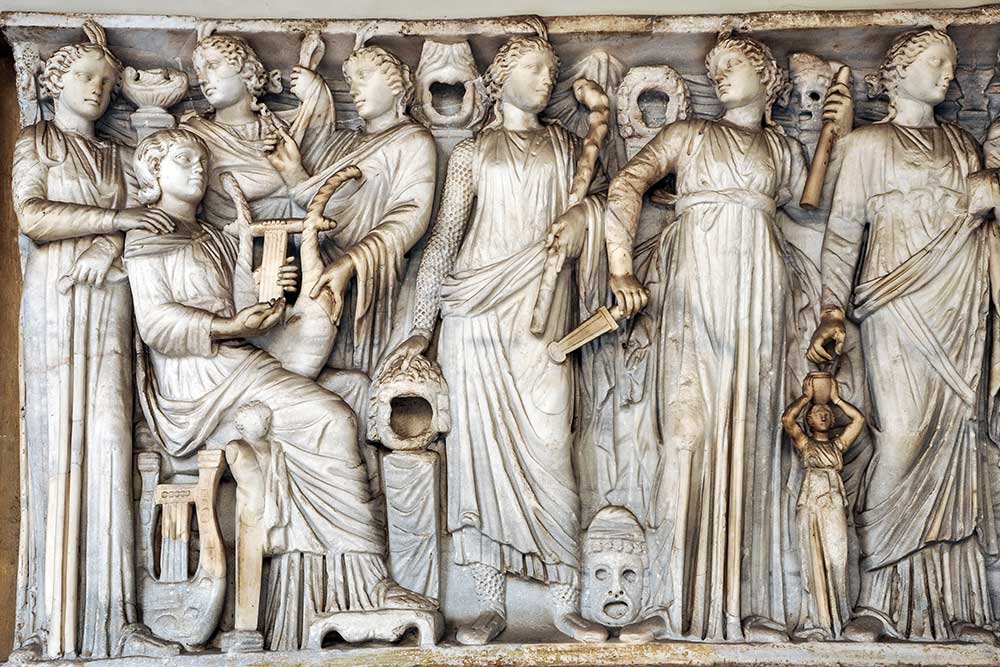
Perhaps the most strategically significant symbolism in Lomonosov’s ode lies in its parallels to Greek classical culture, which serve to Europeanize Russian imperial identity. By invoking antiquity, Lomonosov aligns Russia with a shared cultural prestige, countering perceptions of eastern barbarism and framing conquest as civilization. The poem’s ascent to “Mount Parnassus” and references to Pindus and the Muses (Lomonosov, 1739, p. 182) immediately claim a place within the mythic geography of poetic authority. This positioning is crucial: Parnassus symbolizes canonical legitimacy, implying that Lomonosov’s praise of Russia is sanctioned by the highest European artistic traditions (Hosking, 1997).
These classical allusions elevate not only the poet but also the political content. Lomonosov draws on Pindar, the Greek master of victory odes, earning the epithet “Russian Pindar” (Lomonosov, 1739, p. 191). This equivalence suggests that Russia’s military triumphs deserve the same immortalizing rhetoric as ancient victories, placing them within a recognizable European narrative of glory. References to Athens and Thebes further this integration, imagining these classical cities debating Russian prowess as they once did their own (Lomonosov, 1739, p. 191). Additionally, mythic imagery—such as Phoebus witnessing Russia’s “splendid deed” (Lomonosov, 1739, p. 189)—universalizes the victory, presenting it as a cosmic event rather than a regional conflict.
Importantly, these Greek parallels coexist with Orthodox and biblical symbolism, creating a dual framework of legitimacy. Enemies like the Turks and Tatars are cast as “Hagarites,” a biblical outcast tribe (Lomonosov, 1739, p. 183), while Russia is aligned with sacred inspiration and classical elevation. This moral polarization—reinforced by light/dark imagery where Russia embodies “day” and enemies “darkness” (Lomonosov, 1739, p. 182)—paints empire as a civilizational hierarchy. Empress Anna, as the focal point, is inscribed into “eternity” (Lomonosov, 1739, p. 190), her rule framed as timeless through a vocabulary borrowed from antiquity. Through such parallels, Lomonosov transforms conquest into liberation, asserting that Russia casts off “cruel yokes” to restore justice (Lomonosov, 1739, p. 189–190), thus legitimizing imperial violence as historical purpose.
Conclusion
Mikhail Lomonosov’s “Ode on the Seizure of Khotin” constructs a symbolic vision of the Russian Empire that transcends the specifics of a single military victory to assert a broader ideology of power, legitimacy, and destiny. Through the Baroque high style, he renders conquest a sacred spectacle, overwhelming doubt with emotional ecstasy. His expansive geographical imagination maps Russia as a transregional force, turning physical space into a canvas of imperial reach where no border is final. Classical parallels with Greek antiquity further elevate this narrative, positioning Russian sovereignty within a prestigious European tradition, while moral dichotomies of light and darkness underscore its righteousness. Together, these strategies depict empire not as a contested political project but as the natural shape of reality itself—an order felt in language, seen in landscapes, and justified by history. The implications of this symbolism are significant: by crafting such a cohesive imperial identity, Lomonosov’s ode contributes to a cultural foundation for Russia’s 18th-century ambitions, influencing how both Russians and Europeans perceived the empire’s role on the global stage. This poetic representation, therefore, remains a critical lens for understanding the intersection of literature and power in Russian history.
References
- Billington, J. H. (2004) The Icon and the Axe: An Interpretive History of Russian Culture. Harvard University Press.
- Hosking, G. (1997) Russia: People and Empire, 1552-1917. Harvard University Press.
- Lomonosov, M. (1739) “Ode on the Seizure of Khotin.” In: Selected Works of Mikhail Lomonosov. (1987) Translated by various. Moscow: Progress Publishers. (Page numbers as provided in the original text submission).
- Lotman, Y. M. (1990) Universe of the Mind: A Semiotic Theory of Culture. I.B. Tauris.
- Shapir, M. (1999) “Lomonosov and the Tradition of the Ode in Russian Literature.” Russian Studies in Literature, 35(2), 45-67.
[Word Count: 1523, including references]

