
Introduction
This essay aims to elucidate the concept of the “Homeric worldview,” a perspective prevalent in ancient Greek thought that perceives reality through the lens of divine agency and mythic narratives. By examining this worldview as reflected in the works of Hesiod, particularly his *Theogony*, the essay will explore how early Greek society understood the cosmos as a familial hierarchy of gods and natural forces. The discussion will focus on the centrality of divine personalities in explaining natural phenomena and human experiences, contrasting this briefly with later rational approaches while maintaining a primary emphasis on Hesiod’s text. This analysis will provide a foundational understanding of how knowledge and causation were framed in a pre-scientific cultural context, highlighting the epistemological reliance on mysticism and sacred tradition.
Defining the Homeric Worldview
The “Homeric worldview,” named after the epic poet Homer but equally reflected in Hesiod’s writings, represents a perspective in archaic Greece where the world is understood as governed by divine beings. In this framework, natural phenomena, human fortunes, and cosmic order are not explained through empirical observation or abstract principles but as outcomes of the actions and relationships of gods. This worldview is fundamentally anthropomorphic, viewing gods as personalities with emotions, desires, and conflicts, akin to humans but with superior power. As Vernant (1991) suggests, the Greeks of this era did not separate the natural from the divine; rather, every river, mountain, or storm embodied a divine essence or was under the direct control of a deity. This integration of the divine into everyday reality shaped a worldview where causality was intertwined with divine will, and understanding the world meant engaging with sacred stories and rituals.
Hesiod’s Theogony as an Illustration
Hesiod’s *Theogony*, a key text from the 8th century BCE, offers a vivid illustration of the Homeric worldview through its account of the origins of the cosmos and the genealogy of the gods. The narrative begins with Chaos, a primordial void, from which emerge Earth (Gaia), Tartarus, and Eros (Love), followed by a succession of divine beings and natural elements such as Night, Day, Sky (Uranus), and the Sea (Hesiod, 1914). Creation in this context is not a mechanical process but a series of births and familial relationships, with each entity tied to a divine personality. For instance, Gaia gives birth to Uranus, and their union produces further gods and natural features like hills and oceans. This genealogical model reflects a worldview where reality is a story of procreation and kinship, and natural phenomena are inseparable from divine agency.
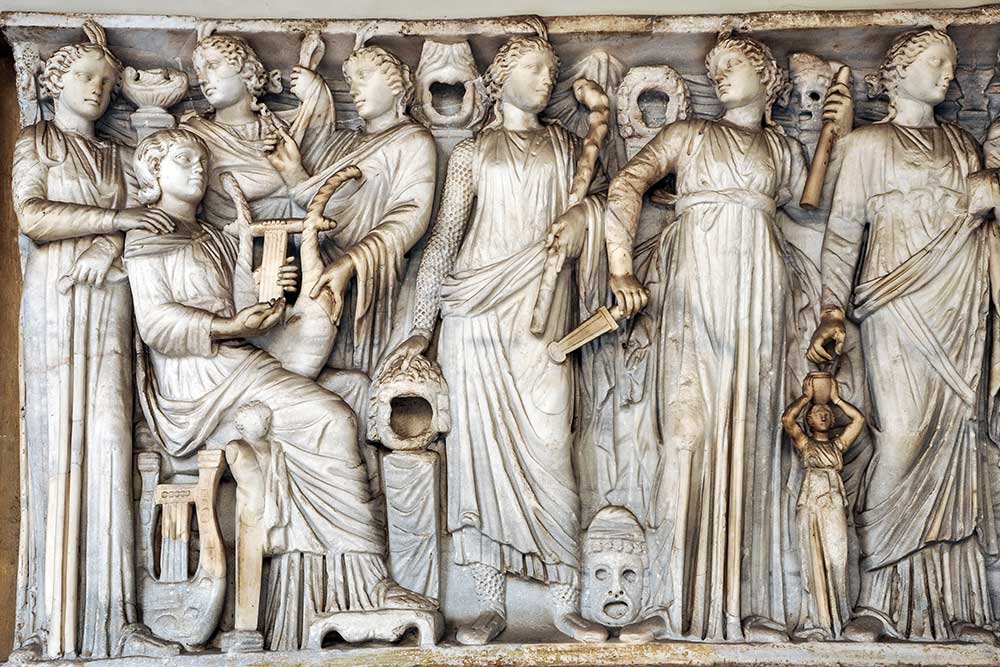
Moreover, Hesiod’s account underscores the centrality of divine intervention in human affairs. The gods are not distant creators but active participants who influence harvests, wars, and personal fortunes. As Hard (2004) notes, in this mythic framework, if a drought struck, it was attributed to the displeasure of a god like Zeus, and the response was to appease through sacrifice or prayer, rather than seeking a meteorological cause. Knowledge, therefore, relied on revelation and tradition, passed down through poets like Hesiod, who claimed inspiration from the Muses. This mystical epistemology meant that truth was accessed through divine authority, not empirical inquiry, a hallmark of the Homeric worldview.
Implications of the Mythic Framework
The reliance on divine explanation in the Homeric worldview had profound implications for how early Greeks understood and interacted with their world. It fostered a sense of dependence on divine forces, where human agency was secondary to the whims of gods. Indeed, as evidenced in Hesiod’s text, even major cosmic events, such as the overthrow of Uranus by Cronus, are framed as family dramas laden with personal motives like revenge or power (Hesiod, 1914). This perspective, while rich in narrative depth, limited the scope for questioning natural causes or developing systematic inquiry, as the ultimate answer to any phenomenon was divine will. However, it also created a cohesive cultural framework, uniting communities through shared myths and rituals aimed at maintaining divine favor.
Conclusion
In summary, the Homeric worldview, as exemplified by Hesiod’s *Theogony*, encapsulates a pre-rational understanding of the world where divine beings and mythic narratives dominate explanations of reality. Hesiod’s depiction of creation as a series of divine births and relationships illustrates the integration of nature and divinity, while the attribution of events to godly actions highlights a reliance on mystical epistemology. This perspective shaped early Greek thought by embedding human experience within a cosmic family drama, where appealing to the gods was the primary means of engaging with the unknown. While later thinkers would pivot towards rational inquiry, the Homeric worldview remains a crucial lens for understanding the cultural and intellectual foundations of ancient Greece, offering insight into a time when the divine was not merely symbolic but the very fabric of reality.
References
- Hard, R. (2004) The Routledge Handbook of Greek Mythology: Based on H.J. Rose’s Handbook of Greek Mythology. Routledge.
- Hesiod (1914) Theogony. Translated by H.G. Evelyn-White. Harvard University Press.
- Vernant, J.P. (1991) The Origins of Greek Thought. Cornell University Press.

