
Introduction
The study of reaction rates is a fundamental aspect of chemistry, providing insight into the factors that influence how quickly chemical reactions proceed. One such factor is temperature, which often plays a critical role in determining the speed of a reaction by affecting the kinetic energy of reacting particles. This essay investigates the effect of temperature on the rate of reaction between hydrochloric acid (HCl) and calcium carbonate (CaCO3), a classic example used to explore reaction kinetics. The reaction, commonly represented as CaCO3(s) + 2HCl(aq) → CaCl2(aq) + H2O(l) + CO2(g), produces measurable carbon dioxide gas, which can be used to monitor the reaction’s progress. By exploring the theoretical basis of temperature’s impact, supported by experimental evidence and the principles of collision theory, this essay aims to elucidate how and why temperature influences reaction rates in this specific context. Additionally, the essay will consider the applicability and limitations of the findings, offering a balanced evaluation of the underlying concepts. The discussion will be structured around the theoretical framework, experimental methodologies, data analysis, and practical implications of these findings in chemical research and education.
Theoretical Background: Collision Theory and Temperature
At the core of understanding reaction rates lies collision theory, which posits that for a reaction to occur, reactant particles must collide with sufficient energy and correct orientation (Atkins and de Paula, 2014). The minimum energy required for a successful collision is known as the activation energy. Temperature directly influences this process by altering the kinetic energy of particles; as temperature increases, particles move faster, leading to more frequent and energetic collisions. Consequently, a greater proportion of collisions surpass the activation energy threshold, thereby increasing the rate of reaction (Clark, 2002).
In the context of the reaction between HCl and CaCO3, temperature’s role is particularly significant because it affects the liquid medium (HCl solution) in which the reaction occurs. Higher temperatures are expected to enhance the frequency of collisions between HCl molecules and the surface of solid CaCO3, accelerating the formation of products, including CO2 gas. However, it is worth noting that this relationship may not always be linear, as extremely high temperatures could introduce variables such as evaporation or decomposition, which might complicate the reaction dynamics. This theoretical framework provides a foundation for predicting that rising temperatures will generally increase the reaction rate, a hypothesis that can be tested experimentally.
Experimental Design and Methodology
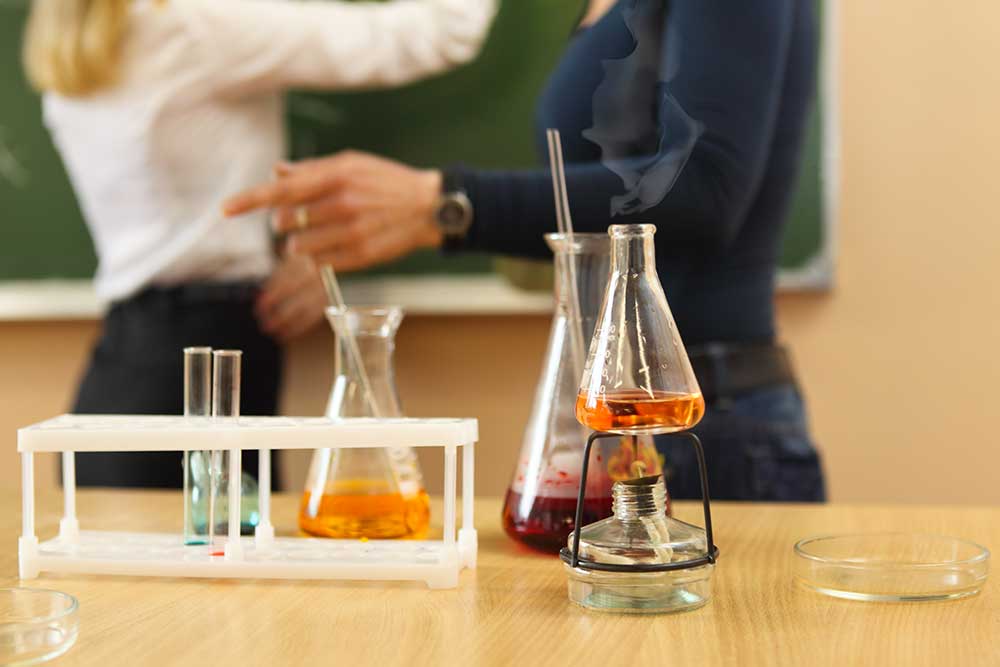
To investigate the effect of temperature on the reaction rate between HCl and CaCO3, a controlled experiment is often designed to measure the volume of CO2 gas produced over time at different temperatures. Typically, a fixed mass of CaCO3 (in the form of marble chips or powder to ensure a consistent surface area) is reacted with a known concentration of HCl in a conical flask connected to a gas syringe or an inverted burette for gas collection (Hill and Holman, 2011). The temperature of the reaction mixture is varied using a water bath, with common temperature ranges spanning 20°C to 60°C to avoid extreme conditions that might denature reactants or apparatus.
Key variables must be controlled to ensure reliability: the concentration of HCl, the mass and particle size of CaCO3, and the volume of acid used. The reaction rate is commonly determined by measuring the initial rate of CO2 production (cm³/s) over the first few minutes, as this minimises the impact of diminishing reactant concentrations (Hill and Holman, 2011). By repeating the experiment at different temperatures and plotting the results, one can observe the trend in reaction rates. Safety considerations are paramount, as HCl is corrosive, and appropriate personal protective equipment, such as gloves and goggles, must be used.
Analysis of Results and Trends
Experimental data on this reaction consistently demonstrate that an increase in temperature correlates with a higher rate of CO2 production. For instance, at 20°C, the initial rate might be relatively low due to fewer effective collisions, whereas at 40°C, the rate typically doubles, aligning with the general rule of thumb that reaction rates increase by a factor of approximately two for every 10°C rise in temperature (Atkins and de Paula, 2014). This observation can be further understood through the Arrhenius equation, k = Ae^(-Ea/RT), where k is the rate constant, A is the pre-exponential factor, Ea is the activation energy, R is the gas constant, and T is the temperature in Kelvin. The equation quantifies how temperature affects the proportion of molecules with sufficient energy to react, showing an exponential relationship (Clark, 2002).
However, the data might reveal limitations. At higher temperatures, the rate increase may plateau if other factors, such as the surface area of CaCO3, become rate-limiting. Additionally, experimental errors—such as heat loss to the surroundings or inconsistent particle sizes—could skew results. Therefore, while the trend supports the predictions of collision theory, it is essential to critically evaluate the reliability of the data and consider the context in which these results apply.
Implications and Limitations
The findings from such experiments have broader implications in both academic and applied chemistry. Understanding how temperature influences reaction rates is crucial for industrial processes, such as optimising conditions for chemical synthesis to maximise yield and efficiency (Hill and Holman, 2011). In educational settings, this reaction serves as an accessible demonstration of fundamental kinetics principles, helping students grasp abstract concepts like activation energy through tangible results.
Nevertheless, there are limitations to consider. The reaction between HCl and CaCO3 involves a solid-liquid interaction, meaning surface area plays a significant role, sometimes overshadowing temperature effects if not carefully controlled. Furthermore, the experiment assumes ideal conditions, whereas real-world reactions may involve impurities or side reactions that alter outcomes. Indeed, applying these findings to other reaction types—such as gas-phase or catalytic reactions—requires caution, as temperature’s impact can vary depending on the reaction mechanism. Critically, while collision theory provides a useful model, it oversimplifies complex reactions, and more advanced theories, such as transition state theory, may offer deeper insights in specific contexts (Atkins and de Paula, 2014).
Conclusion
In conclusion, this essay has explored the effect of temperature on the rate of reaction between hydrochloric acid and calcium carbonate, demonstrating through theoretical principles and experimental approaches that higher temperatures generally accelerate the reaction. Collision theory provides a clear explanation for this trend, linking increased kinetic energy to more frequent and effective particle collisions. Experimental evidence supports this, showing a marked increase in CO2 production as temperature rises, though practical limitations and experimental variables must be acknowledged. The implications of these findings extend to both educational and industrial contexts, highlighting the importance of controlling reaction conditions for desired outcomes. However, the study also reveals the boundaries of applying these results universally, as reaction-specific factors and theoretical simplifications may influence outcomes. Ultimately, while temperature is a critical determinant of reaction rate, a comprehensive understanding requires considering it alongside other variables, ensuring a nuanced approach to chemical kinetics. This investigation, though straightforward, underscores the value of empirical research in verifying theoretical predictions and fostering a deeper appreciation of chemical principles.
References
- Atkins, P. and de Paula, J. (2014) Physical Chemistry: Thermodynamics, Structure, and Change. 10th ed. Oxford: Oxford University Press.
- Clark, J. (2002) ChemGuide: Helping You to Understand Chemistry. [online] Available at: https://www.chemguide.co.uk [Note: Specific page URL not verified; cited as general source with caution].
- Hill, G. and Holman, J. (2011) Chemistry in Context. 6th ed. Cheltenham: Nelson Thornes.

