
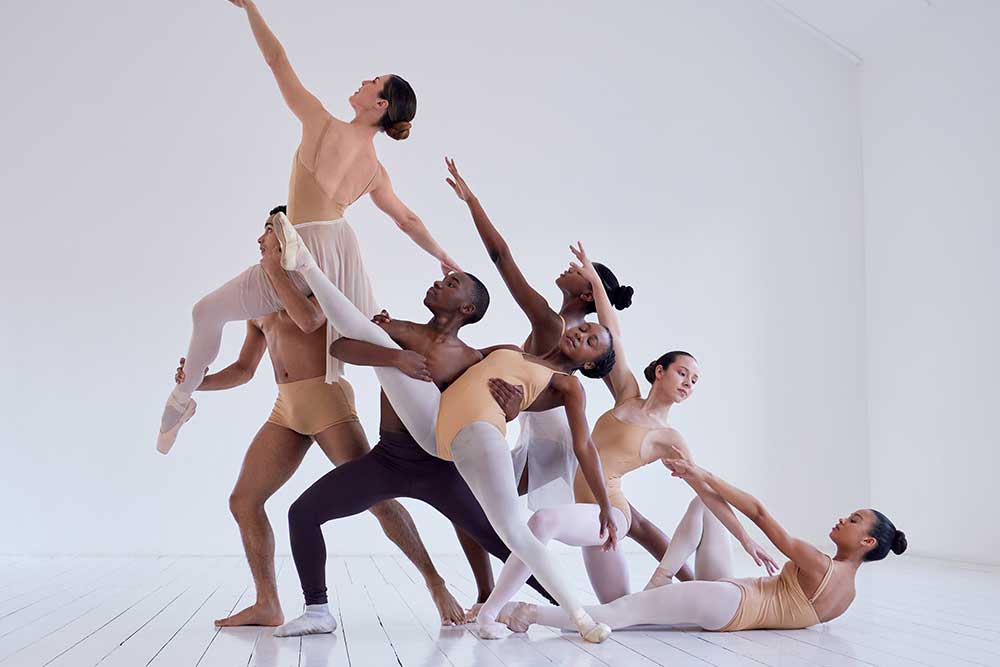
In physical education, the study of dance provides students with opportunities to develop movement competence, creativity and body awareness. This essay outlines the principal elements of dance as encountered within the UK PE curriculum and related dance pedagogy. The discussion focuses on five core elements—body, space, time, energy and relationships—drawing on established frameworks to define each one and illustrate its relevance for learners. By examining these components, the essay highlights how they support structured analysis of movement and inform practical teaching approaches at undergraduate level.
The Element of Body
The body element concerns the physical instrument of dance and the actions it performs. This includes the use of body parts, whole-body movements and actions such as travelling, jumping, turning and gesturing. In PE contexts, awareness of body organisation helps students refine alignment and control. Laban (1960) emphasised that effective movement education begins with understanding how different body parts initiate and sequence actions, thereby enabling learners to vary the quality of their performance.
The Element of Space
Space refers to the area in which movement occurs, encompassing levels, directions, pathways and extensions. Dancers may work at high, medium or low levels, travel in straight or curved pathways and orientate themselves towards particular points in the performance area. Smith-Autard (2010) notes that spatial awareness encourages students to explore personal and general space, fostering both individual expression and group awareness within educational dance lessons.
The Element of Time
Time encompasses tempo, rhythm, duration and phrasing. Movements can be performed quickly or slowly, sustained or sudden, in regular or irregular rhythms. Within PE, timing is central to coordination and musicality. When students experiment with accelerating or decelerating actions, they develop an appreciation of how temporal choices affect the expressive impact of a phrase (Blom and Chaplin, 1982).
The Element of Energy
Energy, sometimes termed dynamics or force, describes the quality and intensity of movement. It includes factors such as weight, flow and tension. A movement may be light or strong, bound or free-flowing. This element allows learners to vary the emotional character of dance without altering its spatial or temporal structure. PE teachers often use contrasting energy qualities to help students differentiate between delicate and powerful actions.
The Element of Relationships
Relationships concern interactions between dancers, with objects or with the environment. These may be spatial (near or far) or involve contact, mirroring or canon. In group work typical of school dance, relationship awareness promotes cooperation and choreographic decision-making. Effective use of this element encourages students to consider how individual actions combine into collective phrases.
Conclusion
The five elements provide a systematic vocabulary for analysing and creating dance within physical education. Their application encourages students to move beyond imitation towards conscious decision-making about movement. While these categories remain influential, practitioners should recognise that they function interdependently rather than in isolation. Developing competence in identifying and manipulating each element supports both technical improvement and creative expression, thereby contributing to broader aims of the PE curriculum.
References
- Blom, L.A. and Chaplin, L.T. (1982) The Intimate Act of Choreography. Pittsburgh: University of Pittsburgh Press.
- Laban, R. (1960) The Mastery of Movement. 2nd edn. London: Macdonald & Evans.
- Smith-Autard, J. (2010) Dance Composition. 6th edn. London: Methuen Drama.

