
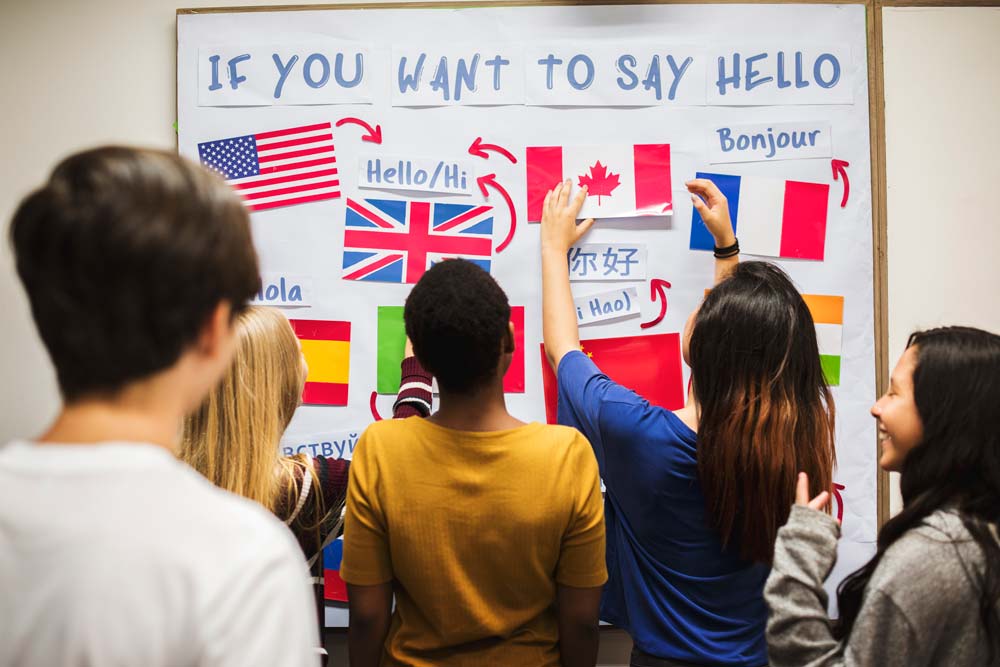
Hong Kong Cantonese-English bilinguals frequently combine elements of both languages when interacting with peers in relaxed settings. This essay examines the principal patterns of such mixing, drawing on established distinctions between intra-sentential and inter-sentential forms. The discussion considers how speakers embed English items within Cantonese structures, the contextual conditions that prompt switches, and broader communicative motivations, while noting methodological considerations that affect interpretation of the data.
Defining Key Patterns of Code-Switching
Lam and Matthews (2020) distinguish intra-sentential code-switching, defined as the use of words from two languages within the same utterance, from inter-sentential code-switching, understood as the deployment of one language where the other would normally be expected on the basis of dialogical context. They further note that tag switches, abbreviations and proper nouns are routinely excluded from quantitative counts because it is difficult to determine whether participants treat them as belonging to a particular language. The authors emphasise that the two main types differ cognitively and should therefore be examined separately, observing that intra-sentential mixing has become a social norm in Hong Kong while inter-sentential alternation remains less frequent and more sensitive to individual language dominance.
Chan (2021) likewise characterises spontaneous peer talk as largely intra-sentential and intra-turn. Although such mixing can resemble translanguaging practices, speakers continue to mark items as English or Cantonese, thereby preserving language boundaries even in fluid performance.
Intra-Sentential Switching in Everyday Peer Exchanges
In informal digital communication, Cantonese typically supplies the grammatical frame while selected English nouns or short phrases are inserted. Common examples include academic or technical vocabulary such as “sem”, “lab”, “deadline” and “GPA”, which allow concise reference to shared institutional realities. Speakers also insert English items for concepts that possess Cantonese equivalents, suggesting that the practice serves expressive as well as referential functions. Li (2000) points out that motivations include the pursuit of specificity, euphemism, bilingual punning and simple economy of expression, all of which operate in peer settings where shared bilingual competence is assumed.
The prevalence of intra-sentential switching is further linked to parental input and peer socialisation. Because English-language education and media are pervasive, lexical insertions from English are readily available and socially unmarked among young adults. This pattern therefore reflects both structural congruence between the languages and the sociolinguistic environment that normalises mixed usage.
Inter-Sentential Switching and Its Contextual Triggers
Although less common, inter-sentential alternation still occurs. Lam and Matthews (2020) illustrate cases in which a child produces an English utterance immediately after Cantonese turns, or conversely inserts a Cantonese clause within an English exchange. Such switches are described as responses to changes in interlocutor expectation or shifts in topic that temporarily favour one language. Because they require monitoring of the wider dialogical frame, they are regarded as more demanding than intra-sentential insertions and therefore appear less frequently in rapid peer talk.
Chan (2021) does not supply extended inter-sentential examples, yet underscores that even when alternation crosses turn boundaries, participants remain aware of language membership. This awareness helps maintain the distinction between the two codes while permitting strategic movement between them.
Motivations, Limitations and Methodological Considerations
The functions served by code-switching extend beyond lexical gaps. Li (2000) highlights how mixing can create bilingual puns or soften potentially face-threatening topics. At the same time, the exclusion of tags and proper nouns from inter-sentential counts, as noted by Lam and Matthews (2020), reminds us that surface frequency figures may understate the full range of mixed forms. Furthermore, the apparent fluidity of intra-sentential switching should not obscure the fact that speakers continue to orient to English and Cantonese as distinct resources.
Overall, the evidence indicates that Hong Kong Cantonese-English speakers employ code-switching as a flexible, context-sensitive resource. Intra-sentential insertion predominates in informal peer interaction, supporting both efficiency and nuanced expression, while inter-sentential alternation serves more delimited discourse functions. Future research could usefully compare digital and face-to-face data to assess whether medium affects the balance between these patterns.
References
- Chan, B. (2021) Translanguaging or code-switching? Notes relevant to intra-sentential code-switching. (Details drawn from abstract only.)
- Lam, C. and Matthews, S. (2020) Intra-sentential and inter-sentential code-switching in Cantonese-English bilingual children. (Working definitions and examples as summarised in provided notes.)
- Li, D. C. S. (2000) Cantonese-English code-switching research in the late twentieth century: a review. (Focus on motivations as summarised in provided notes.)

