
Introduction
This essay examines the concept of learning spaces as defined in the title, drawing on the distinctions between traditional, flexible, specialised and outdoor environments. Written from the perspective of an Extended Project Qualification (EPQ) student investigating the topic, the discussion considers how physical design influences student behaviour, emotion and academic outcomes. The analysis remains limited to broad, well-established observations in educational research, with attention given to the strengths and constraints of different spatial arrangements.
Traditional and Flexible Learning Environments
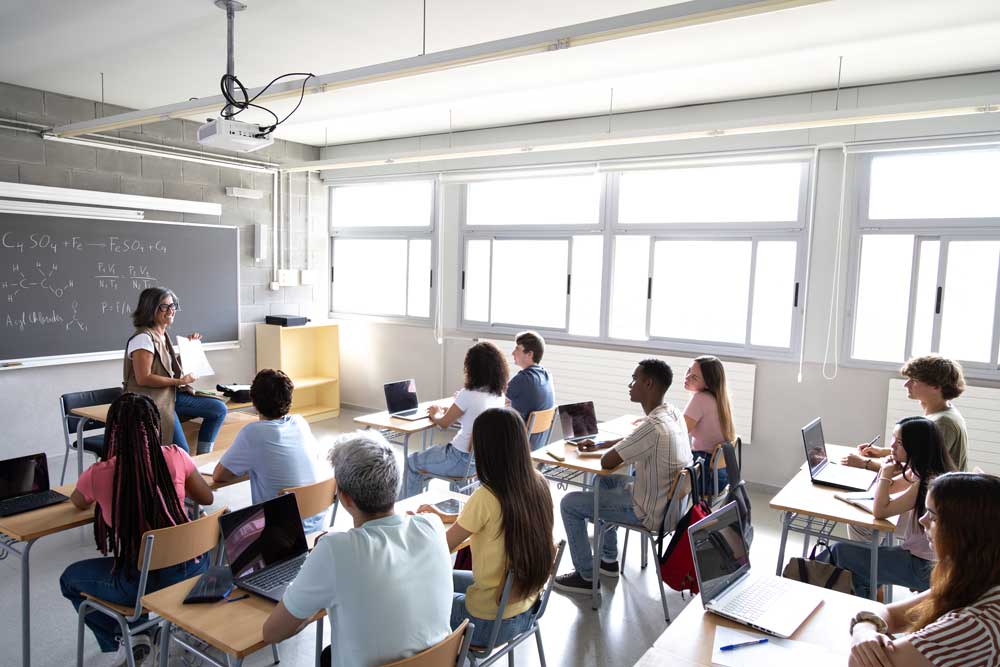
Traditional classroom layouts, characterised by fixed furniture and teacher-centred orientation, have long supported direct instruction and whole-class teaching. This arrangement can promote clarity of delivery and minimise disruption, yet it may also restrict opportunities for peer interaction. In contrast, flexible spaces with movable furniture and zoned areas are generally associated with collaborative and project-based approaches. Such designs arguably encourage student agency and differentiated instruction, though they can present challenges for classroom management when students are unaccustomed to greater autonomy. Evidence from educational design studies suggests that while flexible environments can enhance engagement for many learners, outcomes remain dependent on teaching practices that effectively utilise the available adaptability (Woolner et al., 2012).
Specialised Spaces: Libraries, Laboratories and Outdoor Areas
Libraries and laboratories provide environments tailored to focused, independent or small-group work. These spaces typically emphasise quiet concentration or practical experimentation, supporting tasks that require sustained attention or specialised equipment. Outdoor learning environments extend this range by linking classroom concepts to real-world contexts, particularly in areas such as environmental education. Research indicates that access to outdoor spaces can improve motivation and wellbeing, yet practical constraints such as weather, safety and curriculum time often limit regular use. Furthermore, the benefits observed in studies are not uniform across all student groups, highlighting the need for careful planning when integrating such spaces into mainstream provision.
Influence on Behaviour, Emotion and Engagement
The way a space is organised shapes both observable behaviour and affective responses. Open collaborative zones tend to facilitate discussion and feedback, whereas quieter areas support reflection and individual concentration. These effects are not solely determined by physical features; student perception and prior experience also mediate outcomes. For instance, learners who associate traditional layouts with structured success may initially feel unsettled in more open settings. Overall, the literature points to an interplay between design, pedagogy and emotional climate, suggesting that no single configuration is universally optimal.
Conclusion
In summary, learning spaces encompass a spectrum of designs, each carrying distinct implications for instruction, interaction and student experience. While flexible and outdoor environments offer particular advantages for collaboration and experiential learning, traditional and specialised spaces retain value for focused teaching and independent work. The EPQ investigation into this topic underscores that effective use ultimately depends on alignment between spatial design and pedagogical intent, a relationship that warrants continued, context-specific attention in educational settings.
References
- Woolner, P., Clark, J., Laing, K., Thomas, U. and Tiplady, L. (2012) ‘Changing Spaces: Teacher and Student Perspectives on the Introduction of Innovative Learning Environments’, Improving Schools, 15(2), pp. 148-162.

