
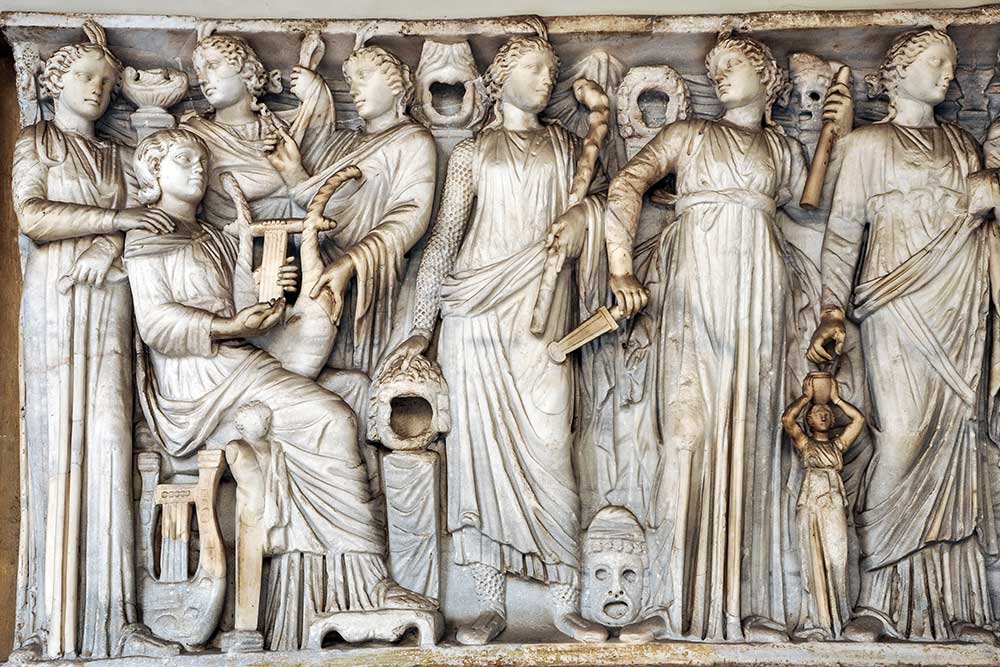
This essay examines the ways in which Aristophanes employed Old Comedy as a vehicle for social and political communication in fifth-century BCE Athens. It considers how his plays functioned within the public sphere, transmitting critiques of leadership, war and gender roles to a broad citizen audience. The discussion draws on selected works to illustrate comedy’s capacity to shape contemporary discourse while acknowledging the limitations of evidence for its precise reception.
Political Satire and Public Discourse
Aristophanes consistently used the parabasis, the chorus’s direct address to spectators, to comment on current events. In Acharnians (425 BCE) the protagonist Dicaeopolis negotiates a private peace treaty, thereby exposing the personal motives behind the Peloponnesian War. Such portrayals arguably invited spectators to question the policies of prominent figures such as Cleon. Scholars note that the licence granted by the festival context permitted unusually frank criticism, yet comic exaggeration also risked diluting the force of the message (Cartledge, 1990). Consequently, the plays operated simultaneously as entertainment and a form of popular political commentary.
Gender, Society and Mediated Critique
Plays such as Lysistrata (411 BCE) inverted conventional gender expectations to address the social costs of prolonged conflict. By placing women at the centre of a sex-strike, Aristophanes highlighted the interdependence of domestic and civic spheres. The device allowed the playwright to communicate anti-war sentiment through humour while remaining within the acceptable bounds of festival performance. Modern analyses observe that these representations reveal contemporary anxieties about Athenian democracy, although they cannot be read as straightforward advocacy for women’s political participation (Silk, 2000). The medium thus mediated complex social issues rather than offering simple prescriptions.
Limitations and Enduring Relevance
Evidence for the actual influence of Aristophanic comedy on voting behaviour or policy remains scarce. Surviving texts and later testimonia suggest popularity, yet the extent to which audiences internalised specific arguments is difficult to determine. Nonetheless, the structural features of Old Comedy—topicality, inversion and direct address—prefigure later forms of satirical journalism in which humour serves to scrutinise power. This continuity underscores comedy’s lasting function as a channel of social communication, albeit one whose effects are mediated by cultural context and audience interpretation.
In conclusion, Aristophanes illustrates how Greek comedy combined entertainment with pointed social and political messaging. While the plays offered citizens an alternative forum for debate, their precise impact is hard to quantify. The case nevertheless demonstrates the enduring relevance of comic forms in shaping public conversation.
References
- Cartledge, P. (1990) Aristophanes and His Theatre of the Absurd. London: Bristol Classical Press.
- Silk, M. S. (2000) Aristophanes and the Definition of Comedy. Oxford: Oxford University Press.
- Dover, K. J. (1972) Aristophanic Comedy. Berkeley: University of California Press.

