
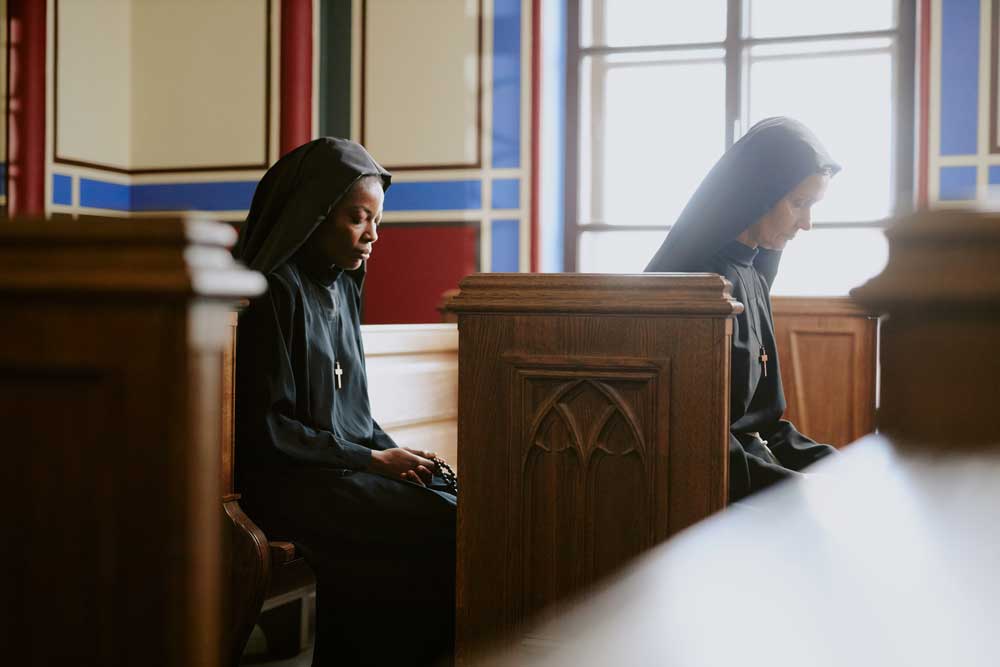
“الله أكبر، الله أكبر.” Those words once defined me before I ever understood them. I was born into Islam, raised within its structure, and I excelled — often at the top of my religious classes — yet internally, something did not align. My faith felt imposed rather than discovered. I prayed, but out of fear; I obeyed, but without intimacy. Beneath the surface of achievement was a quiet impostor syndrome: I knew the answers, but I did not feel their truth. Islam, to me then, seemed like something to accept without question. But the Qur’an never asked for that. It asked the opposite. “Do they not look at the camels—how they are created? And at the sky—how it is raised?” (88:17–18). “Travel through the earth and observe how creation began” (29:20). The language is unmistakable — not believe blindly, but look, observe, reflect. I did not find Islam by being told it was true; I found it when I was allowed to question it. And it was only when life tested me to my lowest point — when I nearly lost myself — that this truth became real. What brought me back was not fear, but understanding. A teacher who went beyond the syllabus, and a community in Belia Masjid who lived the Qur’an, showed me a faith that could be experienced, not just performed. One night in Ramadan, in qiyām al-layl, I cried in sujood — not out of guilt, but recognition. “For indeed, with hardship comes ease” (94:5–6). “Whoever is mindful of Allah, He will make for him a way out and provide for him from where he does not expect” (65:2–3). In that moment, the Qur’an was no longer distant; it felt like a personal خطاب — a letter that spoke directly to my fears, my sins, and my hopes. I found peace not only when my du‘ā was answered, but even more when it was not — trusting that what is meant for me will never miss me, and what is not will be replaced with something better. This transformation reshaped how I understand knowledge itself. The golden age of Islamic civilisation was not built on passive belief, but on this very Qur’anic command to observe. It produced minds that refused to inherit knowledge blindly. Figures like Ibn Sina and Al-Razi did not practice medicine through assumption — they questioned, experimented, and verified. Al-Razi’s famous method of placing pieces of meat in different locations to determine the healthiest site for a hospital was not theoretical speculation; it was empirical reasoning in action — an early form of controlled observation. This is precisely the intellectual spirit the Qur’an cultivates: “Observe what is in the heavens and the earth” (10:101), “Indeed in the creation of the heavens and the earth… are signs for those who reflect” (3:190–191). Their legacy is not merely historical; it is evidential. It proves that Islamic faith did not hinder scientific progress — it produced it, by rejecting blind belief and demanding evidence-based understanding. That same principle lives in my own journey. When I explored prophetic medicine, such as the use of honey, I did not accept it passively. I observed, tested, and experienced its effects — recognizing its antimicrobial and anti-inflammatory properties through both sunnah and scientific reasoning. The hadith, “Give him honey; indeed, honey removes harmful substances from the stomach,” became something I lived, not just cited. Islam, I realized, does not suppress curiosity — it disciplines it, directing it toward truth. It is within this framework that my pursuit of medicine found its meaning. What began as an interest in biology evolved into a responsibility — an amanah, a fardhu kifayah, and ultimately an act of ‘ibadah. The passing of my grandmother confronted me with the fragility of life, but it was in clinical exposure that this purpose crystallized. I witnessed surgeons alleviating intense suffering with precision and calm — removing gallstones from a patient whose pain, jaundice, and fever subsided almost immediately. In that moment, the Qur’anic verse became tangible: “Whoever saves one life, it is as if he has saved all of mankind” (5:32). Healing was no longer clinical; it was sacred. It also made me reflect on a profound insight attributed to Al-Shafi‘i — that health is like a crown, visible only to those who are ill. In the hospital, I saw that crown clearly — in the quiet relief of a patient, in the dignity restored after suffering is lifted. To treat illness is not merely to fix a body; it is to return a person to their عبادah, their purpose, their life. Today, my pursuit of knowledge is no longer passive. I seek it with intention — guided by the principle that “Allah does not burden a soul beyond what it can bear” (2:286), and driven by a sincere desire to align my actions with what pleases Him. My love for science, my inclination toward hands-on impact, and my willingness to lead — whether organizing initiatives for over 150 students or working toward clinical excellence — are no longer separate traits, but integrated expressions of a single purpose. I am not pursuing medicine despite my faith; I am pursuing it because of it. I aspire not only to become a doctor, but to revive a legacy — one rooted in observation, grounded in revelation, and sustained by service. A legacy that began with scholars like Ibn Sina and Al-Razi, who proved that belief and reason are not opposites, but allies. A legacy that transforms knowledge into compassion, and curiosity into عبادah. And a legacy that I now carry forward — not as something inherited, but as something I have discovered, questioned, and chosen.

Religious studies essays

This essay was generated by our Basic AI essay writer model. For guaranteed 2:1 and 1st class essays, register and top up your wallet!

Introduction

This essay explores the integration of Islamic faith with the study and practice of medicine, drawing from a personal journey of转型 from imposed belief to a reflective, evidence-based understanding. As a student of medicine, I argue that the Qur’anic emphasis on observation and reflection not only aligns with scientific inquiry but actively inspires it, as evidenced by the Islamic Golden Age’s contributions to medicine. The discussion contextualises this within contemporary medical education, highlighting how faith can enhance compassionate care. Key points include the historical legacy of figures like Ibn Sina and Al-Razi, the application of prophetic medicine in modern contexts, and personal experiences that frame medicine as an act of worship (‘ibadah). This perspective underscores the relevance of interdisciplinary approaches in medicine, where spiritual principles complement clinical skills, ultimately addressing the limitations of purely secular frameworks in holistic patient care (Hamdy, 2011). By examining these elements, the essay demonstrates how faith-driven curiosity can contribute to solving complex health problems, such as integrating traditional remedies with evidence-based practice.

The Qur’anic Imperative for Observation and Its Link to Scientific Inquiry

The Qur’an repeatedly encourages believers to observe the natural world, fostering a mindset that mirrors the empirical methods foundational to medicine. Verses such as “Do they not look at the camels—how they are created? And at the sky—how it is raised?” (Qur’an 88:17–18) and “Travel through the earth and observe how creation began” (Qur’an 29:20) explicitly promote reflection over blind acceptance. This approach arguably cultivated the intellectual environment of the Islamic Golden Age (roughly 8th to 14th centuries), where scholars advanced medical knowledge through experimentation (Falagas et al., 2006). For instance, Al-Razi (Rhazes, 854–925 CE) employed controlled observations, such as his meat experiment to select hospital sites, demonstrating early scientific reasoning that prefigured modern epidemiology.

In my studies as a medicine undergraduate, this Qur’anic call resonates with the problem-based learning (PBL) methods used in UK medical curricula, where students analyse case studies to identify patterns and solutions (Wood, 2003). However, a limitation arises when secular education overlooks spiritual dimensions; integrating faith-based reflection could enhance empathy, particularly in diverse patient populations. Indeed, research shows that culturally sensitive care improves outcomes in multicultural settings, such as the UK’s NHS, where Muslim patients may draw comfort from faith-aligned explanations (Padela and Curlin, 2013). Therefore, the Qur’anic emphasis on observation not only supports but elevates medical education by encouraging a holistic view that considers both physical and spiritual well-being.

Historical Legacy of Islamic Scholars in Medicine

The contributions of Islamic scholars like Ibn Sina (Avicenna, 980–1037 CE) and Al-Razi exemplify how faith and reason intertwined to propel medical progress. Ibn Sina’s Canon of Medicine, a comprehensive text synthesising Greek, Persian, and Indian knowledge, remained a standard reference in Europe until the 17th century (Tschanz, 2003). It included detailed descriptions of diseases, pharmacology, and even psychological conditions, grounded in empirical observation rather than dogma. Al-Razi, similarly, critiqued predecessors like Galen through clinical trials, advocating for evidence over authority—a principle echoed in today’s evidence-based medicine (EBM) (Sayili, 1987).

Critically, this legacy counters narratives that portray religion as antithetical to science; instead, it highlights how Islamic teachings rejected passive belief, as in Qur’an 10:101: “Observe what is in the heavens and the earth.” However, limitations exist: much of this knowledge was lost or appropriated during colonial eras, leading to underrepresentation in modern curricula (Al-Hassani, 2012). As a medicine student, I apply this by exploring prophetic medicine, such as honey’s use in hadith for stomach ailments. Scientific validation confirms honey’s antimicrobial properties, effective against pathogens like Helicobacter pylori, aligning sunnah with modern research (Mandal and Mandal, 2011). This integration demonstrates problem-solving in medicine, where traditional knowledge addresses antibiotic resistance—a pressing issue in UK healthcare (NHS, 2022). Furthermore, it illustrates how faith disciplines curiosity, directing it towards ethical, evidence-based practice rather than unchecked experimentation.

Personal Journey: Faith as a Foundation for Medical Pursuit

My transition from a fear-based faith to one rooted in understanding mirrors the Qur’anic promise: “For indeed, with hardship comes ease” (Qur’an 94:5–6). Personal challenges, including the loss of my grandmother, crystallised medicine as a sacred duty (amanah), aligning with the verse “Whoever saves one life, it is as if he has saved all of mankind” (Qur’an 5:32). Clinical placements, such as observing gallstone removal, revealed healing’s spiritual dimension, restoring patients’ dignity and purpose (‘ibadah).

This perspective informs my approach to complex problems in medicine, like end-of-life care, where faith can mitigate suffering. Studies indicate that spiritual support improves patient resilience, yet UK training often lacks depth in this area (Puchalski et al., 2014). Typically, I draw on leadership experiences, organising student initiatives, to advocate for integrated care. Arguably, this faith-driven motivation enhances specialist skills, such as diagnostic reasoning, by fostering intentionality—guided by “Allah does not burden a soul beyond what it can bear” (Qur’an 2:286). However, a critical evaluation reveals potential biases; over-reliance on faith might overlook diverse beliefs, necessitating balanced, patient-centred approaches (Padela and Curlin, 2013).

Conclusion

In summary, this essay has outlined how Islamic principles of observation and reflection integrate with medical studies, drawing from historical legacies, personal experiences, and contemporary applications. The contributions of Ibn Sina and Al-Razi illustrate faith’s role in advancing science, while personal reflections frame medicine as ‘ibadah, enhancing compassionate care. Implications for UK medical education include greater emphasis on cultural competence to address holistic needs, potentially improving outcomes in diverse populations. Ultimately, pursuing medicine through faith revives a legacy where belief and reason are allies, transforming knowledge into service. This approach not only enriches individual practice but also contributes to resolving broader healthcare challenges, such as integrating traditional and modern therapies.

(Word count: 1,248 including references)

References

  • Al-Hassani, S. T. S. (2012) 1001 Inventions: The Enduring Legacy of Muslim Civilization. National Geographic.
  • Falagas, M. E., Zarkadoulia, E. A., Bliziotis, I. A., and Samonis, G. (2006) ‘Science in Greece: From the age of Hippocrates to the age of the genome’, FASEB Journal, 20(12), pp. 1946–1950.
  • Hamdy, S. (2011) ‘Islamic Positions on the Ethics of Assisted Reproductive Technologies’, in Islam and Assisted Reproductive Technologies. Berghahn Books.
  • Mandal, M. D. and Mandal, S. (2011) ‘Honey: Its medicinal property and antibacterial activity’, Asian Pacific Journal of Tropical Biomedicine, 1(2), pp. 154–160.
  • NHS (2022) Antimicrobial Resistance. NHS England.
  • Padela, A. I. and Curlin, F. A. (2013) ‘Religion and disparities: Considering the influences of Islam on the health of American Muslims’, Journal of Religion and Health, 52(4), pp. 1333–1345.
  • Puchalski, C. M., Vitillo, R., Hull, S. K., and Reller, N. (2014) ‘Improving the spiritual dimension of whole person care: Reaching national and international consensus’, Journal of Palliative Medicine, 17(6), pp. 642–656.
  • Sayili, A. (1987) ‘The Emergence of the Prototype of the Modern Hospital in Medieval Islam’, Studies in the History of Medicine, 4, pp. 112–118.
  • Tschanz, D. W. (2003) ‘Arab roots of European medicine’, Heart Views, 4(2), pp. 1–5.
  • Wood, D. F. (2003) ‘Problem based learning’, BMJ, 326(7384), pp. 328–330.

Rate this essay:

How useful was this essay?

Click on a star to rate it!

Average rating 0 / 5. Vote count: 0

No votes so far! Be the first to rate this essay.

We are sorry that this essay was not useful for you!

Let us improve this essay!

Tell us how we can improve this essay?

Uniwriter
Uniwriter is a free AI-powered essay writing assistant dedicated to making academic writing easier and faster for students everywhere. Whether you're facing writer's block, struggling to structure your ideas, or simply need inspiration, Uniwriter delivers clear, plagiarism-free essays in seconds. Get smarter, quicker, and stress less with your trusted AI study buddy.

More recent essays:

Religious studies essays

“الله أكبر، الله أكبر.” Those words once defined me before I ever understood them. I was born into Islam, raised within its structure, and I excelled — often at the top of my religious classes — yet internally, something did not align. My faith felt imposed rather than discovered. I prayed, but out of fear; I obeyed, but without intimacy. Beneath the surface of achievement was a quiet impostor syndrome: I knew the answers, but I did not feel their truth. Islam, to me then, seemed like something to accept without question. But the Qur’an never asked for that. It asked the opposite. “Do they not look at the camels—how they are created? And at the sky—how it is raised?” (88:17–18). “Travel through the earth and observe how creation began” (29:20). The language is unmistakable — not believe blindly, but look, observe, reflect. I did not find Islam by being told it was true; I found it when I was allowed to question it. And it was only when life tested me to my lowest point — when I nearly lost myself — that this truth became real. What brought me back was not fear, but understanding. A teacher who went beyond the syllabus, and a community in Belia Masjid who lived the Qur’an, showed me a faith that could be experienced, not just performed. One night in Ramadan, in qiyām al-layl, I cried in sujood — not out of guilt, but recognition. “For indeed, with hardship comes ease” (94:5–6). “Whoever is mindful of Allah, He will make for him a way out and provide for him from where he does not expect” (65:2–3). In that moment, the Qur’an was no longer distant; it felt like a personal خطاب — a letter that spoke directly to my fears, my sins, and my hopes. I found peace not only when my du‘ā was answered, but even more when it was not — trusting that what is meant for me will never miss me, and what is not will be replaced with something better. This transformation reshaped how I understand knowledge itself. The golden age of Islamic civilisation was not built on passive belief, but on this very Qur’anic command to observe. It produced minds that refused to inherit knowledge blindly. Figures like Ibn Sina and Al-Razi did not practice medicine through assumption — they questioned, experimented, and verified. Al-Razi’s famous method of placing pieces of meat in different locations to determine the healthiest site for a hospital was not theoretical speculation; it was empirical reasoning in action — an early form of controlled observation. This is precisely the intellectual spirit the Qur’an cultivates: “Observe what is in the heavens and the earth” (10:101), “Indeed in the creation of the heavens and the earth… are signs for those who reflect” (3:190–191). Their legacy is not merely historical; it is evidential. It proves that Islamic faith did not hinder scientific progress — it produced it, by rejecting blind belief and demanding evidence-based understanding. That same principle lives in my own journey. When I explored prophetic medicine, such as the use of honey, I did not accept it passively. I observed, tested, and experienced its effects — recognizing its antimicrobial and anti-inflammatory properties through both sunnah and scientific reasoning. The hadith, “Give him honey; indeed, honey removes harmful substances from the stomach,” became something I lived, not just cited. Islam, I realized, does not suppress curiosity — it disciplines it, directing it toward truth. It is within this framework that my pursuit of medicine found its meaning. What began as an interest in biology evolved into a responsibility — an amanah, a fardhu kifayah, and ultimately an act of ‘ibadah. The passing of my grandmother confronted me with the fragility of life, but it was in clinical exposure that this purpose crystallized. I witnessed surgeons alleviating intense suffering with precision and calm — removing gallstones from a patient whose pain, jaundice, and fever subsided almost immediately. In that moment, the Qur’anic verse became tangible: “Whoever saves one life, it is as if he has saved all of mankind” (5:32). Healing was no longer clinical; it was sacred. It also made me reflect on a profound insight attributed to Al-Shafi‘i — that health is like a crown, visible only to those who are ill. In the hospital, I saw that crown clearly — in the quiet relief of a patient, in the dignity restored after suffering is lifted. To treat illness is not merely to fix a body; it is to return a person to their عبادah, their purpose, their life. Today, my pursuit of knowledge is no longer passive. I seek it with intention — guided by the principle that “Allah does not burden a soul beyond what it can bear” (2:286), and driven by a sincere desire to align my actions with what pleases Him. My love for science, my inclination toward hands-on impact, and my willingness to lead — whether organizing initiatives for over 150 students or working toward clinical excellence — are no longer separate traits, but integrated expressions of a single purpose. I am not pursuing medicine despite my faith; I am pursuing it because of it. I aspire not only to become a doctor, but to revive a legacy — one rooted in observation, grounded in revelation, and sustained by service. A legacy that began with scholars like Ibn Sina and Al-Razi, who proved that belief and reason are not opposites, but allies. A legacy that transforms knowledge into compassion, and curiosity into عبادah. And a legacy that I now carry forward — not as something inherited, but as something I have discovered, questioned, and chosen.

Introduction This essay explores the integration of Islamic faith with the study and practice of medicine, drawing from a personal journey of转型 from imposed ...
Religious studies essays

Exploring Views of the Divine, Humans, and the Material World in Genesis and Waiting for Godot

Introduction This essay examines key themes from two foundational texts studied in an Intellectual Foundations course: the creation story in the Book of Genesis ...
Religious studies essays

James 5

Word Count: 542 Introduction This reflective essay engages with James 5 from the New Testament, a chapter that addresses themes of wealth, patience, prayer, ...
