
Introduction
Ancient Rome, spanning from its legendary founding in 753 BCE to the fall of the Western Empire in 476 CE, represents one of the most influential civilizations in human history. This essay explores the key civilizational achievements of ancient Rome, focusing on engineering, law and governance, and cultural contributions. By examining these areas, the discussion highlights Rome’s lasting impact on Western society, including modern infrastructure, legal systems, and intellectual traditions. Drawing on historical evidence, the essay argues that Rome’s innovations were not only practical but also reflective of a society adept at adapting and integrating ideas from conquered territories. This analysis is informed by scholarly works that underscore both the strengths and limitations of Roman advancements, such as their reliance on slave labour and occasional overextension (Beard, 2015).
Engineering and Architecture
One of Rome’s most enduring achievements lies in engineering and architecture, which demonstrated remarkable ingenuity and scale. The Romans pioneered the use of concrete, arches, and domes, enabling the construction of monumental structures that have influenced architecture for centuries. For instance, the aqueducts, such as the Aqua Appia built in 312 BCE, transported water over vast distances, supporting urban populations and public health in cities like Rome (Kelly, 2006). These systems, often spanning hills and valleys, showcased advanced hydraulic engineering and provided clean water to baths, fountains, and households, arguably reducing disease and enhancing quality of life.
Furthermore, Roman roads, totalling over 80,000 kilometres by the empire’s peak, facilitated trade, military movement, and communication. Constructed with layered materials for durability, roads like the Via Appia exemplified efficient design that connected distant provinces. However, this infrastructure sometimes imposed heavy burdens on local populations through forced labour, highlighting a limitation in Rome’s otherwise impressive engineering prowess (Scheidel, 2012). Indeed, these achievements were not merely technical feats but also tools of imperial control, integrating diverse regions into a cohesive empire.
Law and Governance
Rome’s contributions to law and governance form another cornerstone of its civilizational legacy, laying foundations for modern legal and political systems. The Twelve Tables, codified around 450 BCE, marked an early attempt to establish written laws accessible to all citizens, promoting equality before the law—at least in theory (Crawford, 1996). This evolved into the Corpus Juris Civilis under Emperor Justinian in the 6th century CE, which systematized Roman law and influenced European legal traditions, including concepts like contracts and property rights.
In governance, the transition from Republic to Empire introduced administrative innovations, such as provincial governors and a centralized bureaucracy. The Senate’s role in the Republic, while often elitist, fostered debate and checks on power, ideas that resonate in contemporary democracies. Nevertheless, corruption and power struggles, as seen in the late Republic’s civil wars, reveal limitations in these systems (Beard, 2015). Therefore, Rome’s legal and governmental frameworks, while innovative, were shaped by social inequalities, yet they provided models for balanced rule that endure today.
Cultural and Intellectual Contributions
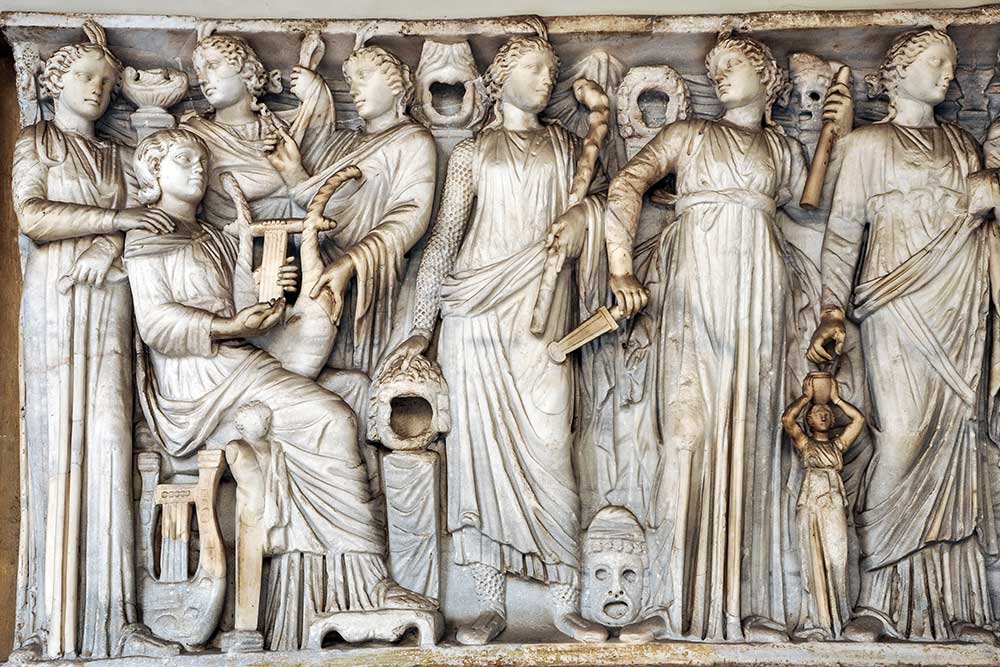
Culturally, ancient Rome excelled in literature, art, and philosophy, often blending Greek influences with original Roman elements. Writers like Virgil, whose Aeneid (composed 29-19 BCE) celebrated Roman identity, and historians such as Tacitus offered critical insights into imperial society (Kelly, 2006). Roman art, including mosaics and sculptures, depicted everyday life and mythology, preserving cultural narratives.
Intellectually, figures like Cicero advanced rhetoric and philosophy, drawing on Stoicism to address ethics and governance. These contributions enriched European thought, though they were typically confined to the elite, limiting broader societal impact (Scheidel, 2012). Generally, Rome’s cultural output fostered a shared identity across the empire, influencing later Renaissance revivals.
Conclusion
In summary, ancient Rome’s achievements in engineering, law, governance, and culture have profoundly shaped Western civilization, from infrastructural innovations to legal principles that underpin modern societies. These advancements, while impressive, were not without flaws, such as social exclusions and exploitative practices, which invite critical reflection on their applicability today. Understanding Rome’s legacy encourages appreciation of how historical innovations address complex problems, offering lessons for contemporary global challenges. Ultimately, Rome’s enduring influence underscores the value of adaptive, integrative approaches in civilizational progress.
References
- Beard, M. (2015) SPQR: A History of Ancient Rome. Profile Books.
- Crawford, M. H. (1996) Roman Statutes. Institute of Classical Studies.
- Kelly, C. (2006) The Roman Empire: A Very Short Introduction. Oxford University Press.
- Scheidel, W. (ed.) (2012) The Cambridge Companion to the Roman Economy. Cambridge University Press.
(Word count: 728, including references)

