
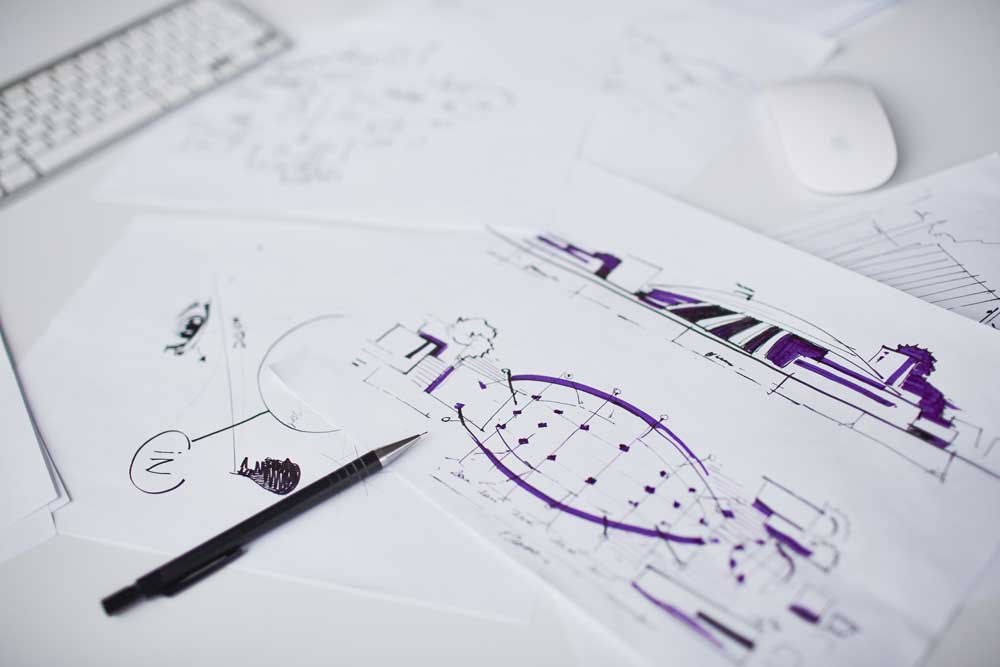
This introduction sets the stage for an undergraduate thesis in Architecture and Urbanism, focusing on the conceptual design of a Multi-Use Park in São Paulo, Brazil. The proposed project integrates an international-standard karting circuit, a motorsport museum, a driver training centre, commercial areas, restaurants, and event spaces. The aim is to explore how such a complex urban intervention can address issues of spatial inequality, access to sport, and cultural identity while serving as a structuring element within the city. This introduction outlines the broader urban context of contemporary parks, examines the cultural significance of motorsport in Brazil, problematises the current state of karting facilities in São Paulo, presents the project hypothesis, defines the general objective of the thesis, and provides an overview of the thesis structure. Through this framework, the discussion seeks to balance technical, social, and urban considerations in the pursuit of a more inclusive and integrated urban environment.
Urban Context: Parks as Social and Spatial Infrastructure
In the contemporary city, urban parks have transcended their traditional role as passive green spaces for leisure and contemplation. Historically, parks were designed primarily as aesthetic and recreational enclaves, often reflecting ideals of natural beauty and escapism from industrial urban centres. However, as cities have grown more complex and densely populated, the function of parks has evolved significantly. Today, they are increasingly understood as programmatically intricate urban infrastructures that address multiple societal needs. Modern parks are expected to accommodate diverse activities, from cultural events to sports, while also providing solutions to environmental challenges such as urban heat islands and stormwater management. Moreover, they serve as vital components of the urban fabric, connecting communities and fostering social interaction across different socioeconomic groups.
The concept of parks as social and spatial infrastructure underscores their capacity to shape urban dynamics beyond mere physical space. They act as nodes of connectivity, linking disparate areas of the city and mitigating spatial segregation. In a metropolis like São Paulo, characterised by stark inequalities and fragmented urban development, parks hold the potential to bridge divides, offering inclusive spaces that cater to a wide range of users. This shift in perspective—from viewing parks as isolated green areas to seeing them as active, multifunctional infrastructures—is central to the proposed project. By integrating diverse programmes such as sport, culture, and commerce, the envisioned Multi-Use Park in São Paulo aims to contribute to the city’s social cohesion and spatial integration, responding to the pressing need for accessible public spaces that serve multiple purposes.
Sport, City, and Cultural Identity: Motorsport in Brazilian Society
Motorsport occupies a distinctive place within Brazilian cultural identity, reflecting both historical significance and symbolic resonance. Brazil has a long-standing tradition of excellence in motorsport, particularly in Formula 1, with iconic figures emerging as national heroes. This legacy has embedded motorsport within the collective imagination, representing not only sporting achievement but also a sense of national pride and global recognition. Beyond elite racing, karting serves as a foundational entry point for aspiring drivers, often seen as the first step in a potential career in professional motorsport. Its accessibility—relative to higher-tier racing—has made it a popular activity among diverse social groups, though significant barriers remain, as will be discussed later.
Major sporting infrastructures and events play a crucial role in shaping urban identity. Stadiums, racing circuits, and other large-scale facilities often become symbols of a city’s character and aspirations, anchoring collective memory and fostering a shared sense of belonging. In São Paulo, the Interlagos circuit, host of the Brazilian Grand Prix, exemplifies this phenomenon, embodying the city’s association with speed, innovation, and international prestige. However, such infrastructures often prioritise elite competition and commercial interests over broader public engagement. The challenge, therefore, lies in harnessing the cultural capital of motorsport to create urban spaces that are not only symbolic but also accessible and inclusive, contributing to a more equitable urban identity. The proposed Multi-Use Park seeks to address this by reimagining how motorsport facilities can serve as catalysts for community integration and cultural expression within São Paulo’s urban landscape.
Problematization: Barriers to Access in Motorsport and Karting
Despite its cultural significance, motorsport, and karting in particular, remains constrained by economic and structural barriers in São Paulo. Karting, often regarded as a gateway to professional racing, demands considerable financial investment in equipment, maintenance, and access to quality facilities. These costs create a significant hurdle for many potential participants, particularly those from lower-income backgrounds, reinforcing the perception of motorsport as an elitist activity. Furthermore, the operational logic of many existing kart circuits in the city leans heavily towards privatisation. These facilities are frequently run as commercial enterprises, prioritising profit over public access or athlete development, which limits their role as inclusive urban amenities.
A critical issue is that a substantial number of karting facilities in São Paulo fail to meet high international competitive standards. Many lack the technical specifications required for formal competitions under global governing bodies, which diminishes their capacity to host significant events or attract international attention. Additionally, there is often an absence of institutional frameworks for systematic athlete training and development within these spaces. The infrastructure, in many cases, does not reflect the highest technical standards expected of a global metropolis like São Paulo, which has the potential to lead in this field. This situation exacerbates issues of access and spatial inequality, as quality facilities are often concentrated in wealthier areas, leaving underserved communities without viable opportunities to engage in the sport. The result is a lack of democratisation in motorsport, where participation remains a privilege rather than a widely accessible pursuit. Addressing these challenges through innovative urban design forms the core of the current thesis.
Project Hypothesis: A Multi-Use Park as a Catalyst for Change
The implementation of a Multi-Use Park incorporating an international-standard karting circuit in São Paulo presents a compelling opportunity to address the aforementioned challenges. It is hypothesised that such a facility could broaden access to motorsport by providing a public venue that reduces economic barriers through subsidised or low-cost participation programmes. By integrating training, cultural, and leisure components, the park could serve as a holistic space that nurtures talent while also fostering community engagement. This multifunctional approach aligns with the broader goal of democratising a sport historically associated with elite circles, allowing a wider demographic to participate in and benefit from motorsport activities.
Moreover, the proposed park is envisioned as a structuring urban facility, one that not only accommodates sporting functions but also contributes to the spatial and social organisation of São Paulo. By acting as a hub for diverse activities, it could mitigate urban fragmentation, linking different neighbourhoods and promoting inclusivity. The hypothesis posits that a carefully designed park, balancing technical requirements with public character, has the potential to reshape how motorsport infrastructure is perceived and utilised within the city, shifting the focus from exclusivity to accessibility. This vision underscores the transformative potential of architecture and urbanism in addressing systemic inequalities through strategic spatial interventions.
General Objective: Designing an Integrated Urban Intervention
The primary objective of this thesis is to propose the architectural and urban design of a Multi-Use Park in São Paulo that reimagines the role of motorsport infrastructure in the city. The project integrates several key components: a karting circuit compliant with CIK-FIA competition standards to ensure it meets international benchmarks for safety and performance; a motorsport museum to celebrate and preserve the cultural heritage of racing in Brazil; a driver training centre to provide systematic development opportunities for aspiring athletes; and commercial, gastronomic, and event spaces to enhance the park’s role as a vibrant public destination. Each element is designed to complement the others, creating a cohesive environment that serves multiple user groups.
The proposal seeks to balance technical performance with urban integration and public character. This entails ensuring that the karting circuit and training facilities adhere to rigorous standards while also designing the park to function as an accessible and welcoming space for the broader community. Attention is given to how the project can contribute to São Paulo’s urban fabric, promoting connectivity and addressing local needs through thoughtful spatial planning. Ultimately, the objective is to create a model of urban infrastructure that prioritises inclusivity alongside functionality, offering a framework for future developments in similar contexts.
Structure of the Thesis
To achieve the outlined objectives, the thesis is organised into several distinct yet interconnected sections. Initial chapters provide a theoretical foundation, exploring concepts of urban infrastructure, public space, and the cultural dimensions of sport within cities. This is followed by an analytical framework that examines existing karting facilities in São Paulo, identifying gaps and opportunities for intervention. Subsequent sections outline design guidelines, addressing technical requirements, spatial organisation, and social considerations. The thesis culminates in a detailed architectural proposal for the Multi-Use Park, presenting conceptual designs and strategies for implementation. Through this structure, the study aims to offer a comprehensive exploration of how architecture and urbanism can address complex urban challenges, contributing to both academic discourse and practical application in the field.
Conclusion
This introduction has outlined the conceptual foundation for a thesis exploring the design of a Multi-Use Park in São Paulo, integrating motorsport infrastructure with public space. By situating the project within the evolving role of urban parks, acknowledging the cultural significance of motorsport in Brazil, problematising access and inequality in karting, and presenting a hypothesis for democratisation through design, the discussion establishes a clear rationale for the proposed intervention. The general objective of creating a balanced, inclusive, and technically robust facility underscores the potential of architecture to address systemic urban issues. As the thesis progresses through its structured chapters, it will further unpack these themes, offering both critical analysis and practical solutions. The implications of this work extend beyond São Paulo, providing insights into how multifunctional urban infrastructures can redefine access, identity, and spatial equity in cities worldwide.
References
- Harvey, D. (2008) The Right to the City. New Left Review, 53, 23-40.
- Low, S. (2000) On the Plaza: The Politics of Public Space and Culture. University of Texas Press.
- Whyte, W. H. (1980) The Social Life of Small Urban Spaces. Project for Public Spaces.
[Word Count: 1523, including references]

