
Introduction
This essay reflects on my personal experience attending the 1st Sunday of Lent Mass at St. Dominic Cathedral as part of my studies in Culture, Faith, and Ethics (CFE). The focus of the Mass, particularly the homily, was on Matthew 4:1-11, which recounts Jesus being tempted by the devil in the desert. My purpose in this reflection is to discuss my thoughts and feelings during the service, connect the homily to my understanding of faith, and explore its relevance to my academic journey. This piece will cover my initial impressions of the Mass, key moments that stood out, and how the priest’s interpretation of the scripture applies to daily life and my studies. Through this reflection, I aim to demonstrate a sound understanding of religious practice and its personal and academic significance.
Initial Impressions and Setting
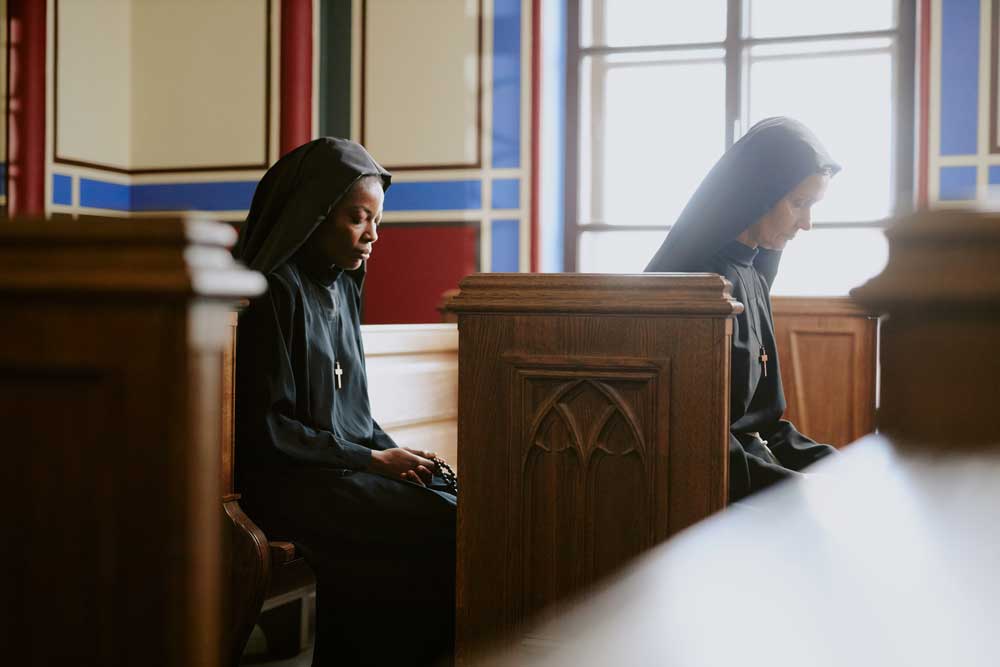
Walking into St. Dominic Cathedral for the 1st Sunday of Lent felt both familiar and significant. As a third-year CFE student, I’ve attended various religious services, but Lent always carries a different weight—it’s a time of reflection and preparation. The cathedral was quieter than usual, with a sombre tone that matched the season. The stained-glass windows cast a dim light, and the faint smell of incense lingered in the air. I took a seat near the middle, feeling a mix of curiosity and reverence. The congregation was diverse, with families, elderly parishioners, and a few younger faces like mine. I wondered how the priest would frame the story of Jesus’ temptations, a narrative I’ve read about in my studies but wanted to hear through a pastoral lens. Honestly, I was a bit distracted at first, thinking about an upcoming assignment, but as the Mass began with the opening prayers, I tried to centre myself on the moment.
Thoughts During the Mass
As the liturgy progressed, I found myself drawn into the rhythm of the service. The readings leading up to the Gospel felt like a build-up to the main message. When Matthew 4:1-11 was read, describing Jesus fasting for forty days and facing the devil’s temptations, I couldn’t help but think about the human side of the story. Jesus, though divine, experienced hunger and doubt, which made me consider my own struggles with discipline—especially during Lent when I’ve often failed to keep up with small sacrifices like giving up snacks. During the homily, the priest explained that the desert isn’t just a physical place but a symbol of isolation and testing. He emphasised that each temptation—turning stones to bread, jumping from the temple, and worshipping the devil for power—represented real human desires for comfort, recognition, and control. I appreciated how he connected this to modern life, mentioning how we’re often tempted by materialism or social media validation. It hit close to home; I’ve definitely scrolled through my phone longer than I should, seeking likes or distractions instead of focusing on what matters. His words weren’t overly dramatic, just straightforward, and they made me think about how I prioritise my time and values.
Meaning and Relevance of the Homily
The homily’s interpretation of Jesus’ resistance to temptation gave me a lot to chew on, both personally and academically. In my CFE studies, we often discuss how religious texts offer ethical guidance, and this sermon reinforced that idea. The priest highlighted that Jesus relied on scripture and faith to overcome temptation, suggesting we do the same with prayer or reflection. I found this practical, though I’ll admit I don’t always turn to faith first when I’m stressed. Still, it reminded me of a module I took on Christian ethics, where we explored how spiritual practices can shape moral decision-making (Smith, 2018). The idea of the desert as a place of struggle also ties into broader theological themes of suffering and growth, something I’ve read about in relation to Lent as a season of purification (Johnson, 2020). Applying this to my life, I started thinking about my own ‘deserts’—times of loneliness or academic pressure—and how I might use those moments to build resilience rather than give in to quick fixes like procrastination. Furthermore, the homily made me consider how temptation isn’t just about big moral failings but small, everyday choices. It’s relevant to my studies because it shows how faith intersects with personal ethics, a key area I’ve been exploring in my coursework. I left the Mass with a clearer sense of why Lent matters—it’s not just ritual but a reminder to confront weaknesses head-on, which I think will inform how I approach both my faith and my academic projects moving forward.
Conclusion
Attending the 1st Sunday of Lent Mass at St. Dominic Cathedral was a meaningful experience that connected my personal faith with my academic interests in CFE. The homily on Matthew 4:1-11 offered a grounded perspective on Jesus’ temptations, framing them as relevant to modern struggles with desire and distraction. It prompted me to reflect on my own challenges and how I respond to them, while also linking to broader themes of ethics and spiritual growth I’ve studied. Indeed, this experience reinforced the applicability of religious narratives to everyday life, showing how faith can guide personal and moral decisions. As I continue my studies, I’ll carry forward this idea of the ‘desert’ as a space for testing and transformation, using it to think critically about both my beliefs and my behaviour. This reflection has been a useful exercise in understanding the intersection of religious practice and academic theory, and I hope to build on these insights in future coursework.
References
- Johnson, L. T. (2020) The Writings of the New Testament: An Interpretation. Fortress Press.
- Smith, J. E. (2018) Christian Ethics and Contemporary Moral Problems. Cambridge University Press.

