
Introduction
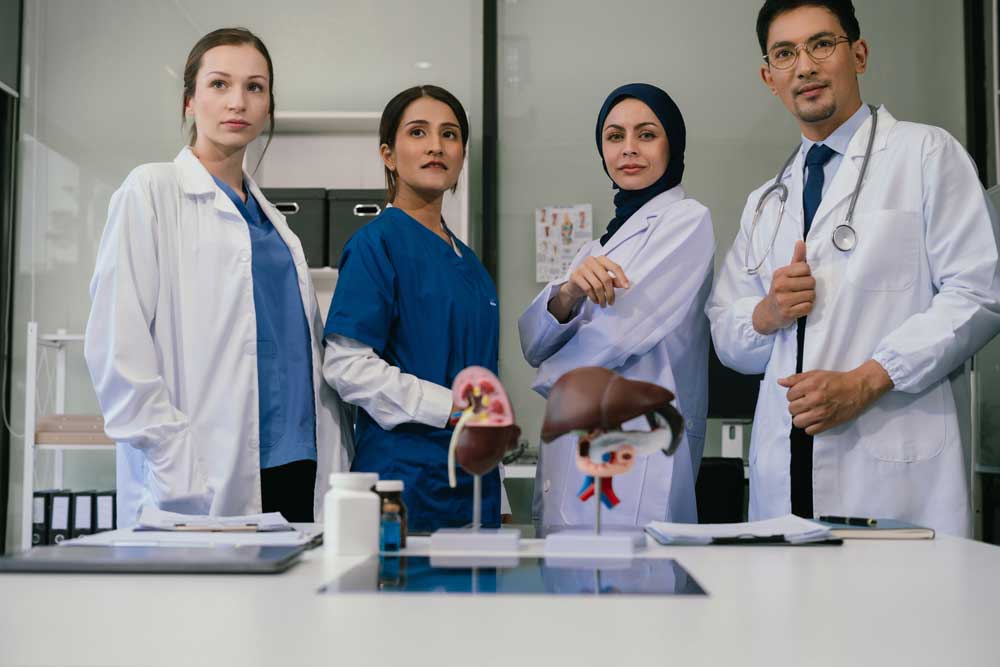
This essay reflects on my experiences as a nursing associate student learning from members of a multi-disciplinary team (MDT) in a healthcare setting. The purpose of this reflection is to explore how collaboration with professionals from diverse disciplines has shaped my understanding of patient care, enhanced my communication skills, and highlighted the importance of integrated working. The context of this reflection lies within my clinical placements, where I have engaged with nurses, doctors, physiotherapists, and social workers, among others. This essay will discuss key learning points under thematic headings, including the value of shared knowledge, challenges in communication, and personal growth in professional practice. By drawing on academic literature and personal experiences, I aim to demonstrate the significance of MDT collaboration in delivering holistic care.
The Value of Shared Knowledge in Patient Care
Working within an MDT has broadened my understanding of patient care beyond the nursing perspective. Each discipline brings unique expertise, contributing to a more comprehensive approach to treatment. For instance, during a placement in a community care setting, I observed how a physiotherapist’s input on mobility exercises complemented the medication management plans devised by doctors and nurses. This aligns with the findings of Reeves et al. (2013), who argue that interprofessional collaboration enhances patient outcomes by addressing multiple facets of health needs simultaneously. Moreover, I learned to appreciate the social workers’ role in addressing non-medical factors such as housing or family support, which are critical to patient recovery but often overlooked in a purely clinical focus. This shared knowledge has reinforced my belief in the necessity of a holistic approach, although I recognise that integrating diverse perspectives can sometimes be complex due to differing priorities among team members.
Challenges and Growth in Communication
Effective communication is the cornerstone of MDT collaboration, yet it presents notable challenges. During my placements, I initially struggled to articulate my observations clearly to senior team members, fearing misinterpretation. For example, in a hospital ward, I hesitated to share a patient’s subtle change in mood with a mental health specialist, unsure of its relevance. Reflecting on this, I now understand the importance of assertiveness and clarity, as supported by NMC (2018), which emphasises that nursing associates must communicate effectively to ensure patient safety. Furthermore, I have learned to adapt my language when discussing care plans with non-nursing professionals, avoiding jargon to ensure mutual understanding. This experience, though challenging, has fostered my ability to navigate complex team dynamics and has heightened my awareness of the need for continuous improvement in communication skills.
Personal and Professional Development
Engaging with an MDT has been instrumental in my professional growth. I have developed a deeper appreciation for the importance of mutual respect and trust within a team. For instance, witnessing a consultant seek input from a junior nurse during a case discussion demonstrated how hierarchical barriers can be overcome to prioritise patient care. This aligns with research by West and Lyubovnikova (2013), who highlight that effective teamwork in healthcare relies on psychological safety, where all members feel valued. Additionally, I have gained confidence in identifying my role within the team, recognising that even as a student, my observations can contribute to better decision-making. However, I acknowledge that I still need to work on managing conflicting opinions within the team, a skill I aim to refine through further practice and reflection.
Conclusion
In conclusion, learning from an MDT as a nursing associate student has been a transformative experience. The shared knowledge within the team has deepened my understanding of holistic care, while communication challenges have prompted significant personal growth. Moreover, witnessing and participating in collaborative practice has enhanced my professional confidence and underscored the value of mutual respect in healthcare settings. These experiences carry important implications for my future practice, as they highlight the need for continuous learning and adaptability in working with diverse professionals. Ultimately, this reflection reaffirms the critical role of MDTs in achieving optimal patient outcomes, a principle I will carry forward into my career.
References
- Nursing and Midwifery Council (NMC). (2018) The Code: Professional standards of practice and behaviour for nurses, midwives and nursing associates. NMC.
- Reeves, S., Lewin, S., Espin, S. and Zwarenstein, M. (2013) Interprofessional Teamwork for Health and Social Care. Wiley-Blackwell.
- West, M. A. and Lyubovnikova, J. (2013) Illusions of team working in health care. Journal of Health Organization and Management, 27(1), pp. 134-142.

